What to Look for When Choosing a Product Tracking System: 10 Criteria

When choosing a product tracking system, begin with the product, the level of detail, and the business decision the system must support—not the length of a feature list. The right solution should make product identity, labels, data flows, reporting, security, and field operations work within one coherent scenario.
A common mistake is treating a large number of dashboards as proof of capability. A platform may look impressive, yet fail to stop a mismatched label, reconcile a shipment with an authentication event, or identify missing transactions after an outage. In that case, it creates presentation value rather than operational visibility.
This guide divides product tracking system selection into ten measurable criteria. Procurement, operations, quality, and IT teams can use the same scorecard to connect requirements with proposals, then base the final decision on observed pilot evidence rather than a supplier presentation.
1. Define the business decision the system must support
Write down the event that needs to be resolved. The goal might be finding an affected batch during a recall, authenticating every consumer unit, investigating unauthorised channel movement, or reducing warranty abuse. These objectives require different levels of data and different user journeys.
Name the person who acts on each use case. Quality may need production origin, a channel manager may compare shipment destination with authentication location, and customer service may need prior-use status. The selection brief should explain who makes which decision when a specific event occurs.
- The product family and risk being examined
- The business question that must be answered
- The responsible team and its authority
- The source records required for the decision
- The expected output and response window
Proposals cannot be compared until this short scope exists. One supplier may price consumer authentication, another warehouse movement, and another a complete production and after-sales flow. Similar product language can conceal substantially different operational boundaries.
2. Separate batch, serial, and item-level identity
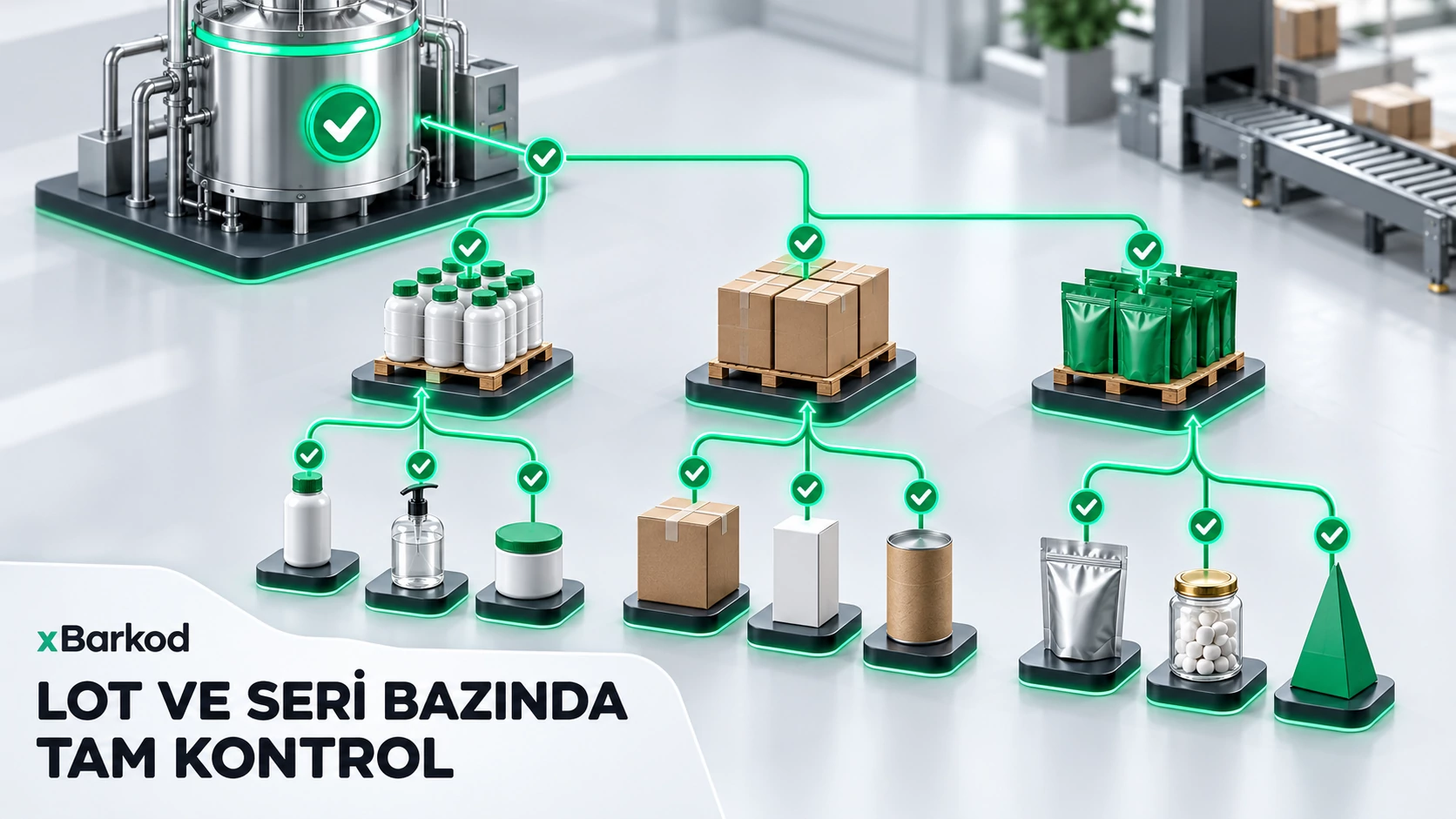
Batch tracking identifies a group that shares production conditions, while a serial or item identifier distinguishes one product from another. A batch may be sufficient for recall and quality analysis. Item identity is needed when the business must examine previous code use or where a particular package appeared.
Do not treat these levels as competing alternatives. A product can be connected to both its production batch and a unique authentication identity. The batch and serial-level tracking guide explains how the required identity changes with the decision the business needs to make.
The GS1 Global Traceability Standard frames traceability around identification, data capture, and information sharing. Ask the supplier to demonstrate how product, location, and logistics identifiers will map to the master data already used across your organisation.
3. Test labels and data carriers under field conditions
Label selection is not merely a choice between QR codes, barcodes, and RFID. Packaging material, curved surfaces, moisture, temperature, abrasion, print quality, and application speed can affect readability. If the label cannot be applied to the correct product on the line, the rest of the system cannot produce dependable data.
A visible QR code provides an accessible consumer touchpoint, but a copyable image may not address every threat on its own. Depending on product risk, define separate roles for unique identity, a scratch-off or concealed PIN, tamper evidence, and repeated-use checks.
- Produce samples with the actual package and artwork.
- Test application and scanning at normal line speed.
- Try damaged, poorly lit, and partly obscured codes.
- Run wrong-product, wrong-batch, and duplicate-label cases.
- Confirm how waste and reprint records are closed.
GS1 Digital Link provides a standard way to express GS1 identifiers in web addresses. If you use GS1 identities, establish at the beginning how the chosen carrier will work with existing encoding, print, scanning, and enterprise data structures.
4. Make the data model and integration boundary visible
Assign a system of record for product name, stock code, batch, serial, authentication identity, and event status. When the same field can be changed freely in two systems, records will diverge. A good solution shows where data originates, who may change it, and how discrepancies are reconciled.
If ERP, manufacturing, warehouse, e-commerce, or CRM connectivity is required, do not accept “we have an API” as a complete answer. Transaction order, authorisation, error codes, retries, rate limits, and post-outage reconciliation should be documented. The product authentication API integration guide expands these acceptance questions.
Historical data migration also belongs in scope. If legacy serial numbers, open warranties, or products already in distribution must move, prepare mapping rules and an exception report before the transfer. A demonstration that covers only new production does not explain transition risk.
5. Ask which action each report initiates
A map, chart, or counter is not automatically decision support. Define thresholds, owners, and investigation steps for repeated use, unexpected geography, many attempts in a short period, or an inactive identity. Users should be able to understand why an alert was created.
Not every alert proves counterfeiting. Travel, border regions, bulk sales, returns, or test activity can look unusual. The platform should let investigators review product, batch, shipment point, time, and previous events together, record an outcome, and classify reasons for false positives.
For example, one identity appearing in distant locations within a short interval might open a case. The team first checks identity status and the shipment channel, then collects seller or consumer evidence. The value comes from converting a point on a map into a traceable workflow, not from the red marker itself.
6. Put security, privacy, and access control in the proposal
The system should restrict users according to their duties and separate permission to generate identities, activate them, view reports, and export data. It should answer who changed a critical record and when. Ask for a demonstration of access removal, credential renewal, and event investigation.
If location, phone, or account-linked data may be collected, define the processing purpose and retention period before launch. The Turkish data protection authority's general processing principles require personal data to be relevant, limited, and proportionate to its purpose and retained only as needed. Obtain expert advice on the roles and obligations applicable to your project.
- Role-based access and approval separation
- Searchable transaction and change records
- Rules for export, retention, and deletion
- Backup and restoration testing
- A data handover and access-closure plan at service end
Do not accept security claims solely as presentation text. Request the current architecture, responsibility boundaries, and verifiable controls that apply to your project. If a certificate or technical specification is cited, verify its scope and currency in the underlying document rather than interpreting a broad phrase as a guarantee.
7. Measure operational fit and user experience
Label ordering, identity generation, artwork approval, line application, waste handling, and reprints are part of everyday work. Each step needs an owner, a fallback, and an exception record. If one production shift cannot use the process consistently, downstream reports will also become unreliable.
When consumer authentication is in scope, test the journey on real phones. Finding the code, revealing the concealed area, understanding the result, and reaching support all matter. Treating failed attempts only as user error can hide a label or interface problem.
Document support channels, responsibility allocation, change management, and training. Also ask which formats will be available for identities, event history, and reports when the contract ends. A system without an exit plan may fit today but create avoidable dependency tomorrow.
8. Compare proposals with a weighted scorecard
The importance of each criterion depends on the business. Item authentication and case management may dominate for a high-risk consumer product; batch relationships and reconciliation may matter more when production origin is critical. Set weights before reviewing proposals so they are not adjusted later to favour a preferred supplier.
| Criterion | Evidence to request | Example acceptance result |
|---|---|---|
| Identity level | Batch, serial, and item demonstration | The selected product matches the correct record |
| Field application | Pilot on the real package | Wrong and duplicate labels are stopped |
| Integration | Error and outage scenario | No missing or duplicate business record |
| Case management | Alert-to-closure example | The owner and outcome remain traceable |
| Data control | Export and permission test | Required data is accessible and restricted |
Do not score only “available” or “unavailable.” Use evidence levels such as not demonstrated, shown in a demo, and verified in the pilot. Giving more weight to pilot evidence exposes the difference between a sales promise and a working process.
9. Run the pilot against real acceptance criteria
Choose a representative product family, a controlled production quantity, and actual users. Alongside the normal path, test unreadable labels, wrong batches, repeated identities, connectivity loss, and unauthorised access. Before each case, write the expected outcome and where the evidence should appear.
Acceptance criteria must be observable: correct product-to-identity mapping, duplicate prevention, searchable exception records, complete data export, and the responsible team's ability to close a case. Avoid a universal success percentage; set thresholds from your own risk and measured pilot results.
The pilot also clarifies commercial comparison. Identity and label quantities, integration work, user roles, support, and possible reprint costs enter the same scope. The product authentication system pricing guide helps align proposals on equivalent components.
10. What should be verified when evaluating xBarkod?
xBarkod's live website describes a unique QR code and concealed PIN for each product, prior-use checking, consumer authentication, and company-panel visibility of time and location. Ask to see those functions within your own identity, label-application, and case-management scenario.
When assessing the xBarkod product authentication solution, bring a scope brief and acceptance tests for one product family. Confirm integration, data fields, user roles, support, and reporting in the current proposal and technical documentation. That turns the decision from a general promise into evidence grounded in your operation.
Frequently Asked Questions
Is a product tracking system the same as an inventory system?
No. Inventory systems usually manage quantity and warehouse movement. A product tracking system connects batch, serial, or item identity with production, shipment, authentication, warranty, and event history as required. The systems may integrate, but their data detail and business purposes differ.
Does every product need a unique code?
Not always. Batch-level data may be sufficient for production origin or group recall. An item-level code becomes useful when the business must distinguish previous use, channel movement, or consumer authentication for a particular package. The choice should follow the event under investigation and product risk.
Can a QR code alone prevent counterfeiting?
No. A visible QR image can be copied. Unique records, concealed PINs, repeated-use checks, tamper evidence, and case workflows can be combined according to risk. No layer guarantees that counterfeiting disappears; the objective is to raise the difficulty and make suspicious activity visible.
Should a company choose a packaged platform or custom development?
The answer depends on process differences, integration depth, internal capability, and total ownership cost. A packaged platform can accelerate launch; custom development can provide more control while creating a maintenance burden. Test both options against the same acceptance criteria.
How large should a product tracking pilot be?
There is no universal quantity. It should represent actual printing and line conditions and include at least one normal journey plus the main failure cases. Starting with a higher-risk product family instead of the full portfolio makes problems easier to isolate and investigate.
Which deliverables must appear in the proposal?
Document the identity and label scope, integration boundary, user roles, reports, support, security responsibilities, data export, pilot, acceptance criteria, and end-of-service plan. Pricing should map to these deliverables so hidden differences in scope do not emerge later.
Base the decision on working evidence, not feature count
The right product tracking system is not the one with the most features. It is the one that reliably manages the identity required for your product and risk. Proposals become comparable when the business decision, identity level, field label, data owner, case workflow, and security responsibility share one scope.
Create the scorecard before collecting proposals, then run a small pilot with real packaging, real users, and adverse cases. Use the same card in an xBarkod discussion and request demo or pilot evidence for every critical criterion. This moves procurement from marketing language to measurable operational results.
More Articles

Battery Product Authentication: Identity, Channels, and Passport Boundaries
Plan battery product authentication correctly by separating model, batch, serial, item codes, channel evidence, and EU battery passport requirements.

How to Prevent Counterfeit Products: 8 Lifecycle Controls
Learn how brands can prevent counterfeit products with eight practical controls spanning suppliers, packaging, unique identity, channels, and incident review.
Food Lot Tracking: A Practical Guide from Records to Recall Readiness
Build food lot tracking with current batch rules, linked ingredient-production-dispatch records, recall drills, and item-level authentication controls.