How to Prevent Counterfeit Products: 8 Lifecycle Controls

Preventing counterfeit products begins before suspicious goods appear in the market. A brand needs to make the genuine product's identity, packaging, and channel journey manageable, then connect manufacturing, packing, distribution, customer authentication, and incident review in a layered control plan.
No hologram, QR code, or contract resolves every risk. An effective approach combines physical measures that make copying harder with unique product identity, controlled supply, authorised-channel records, and clear response ownership. Prevention then becomes part of the whole product lifecycle rather than a feature attached to one label.
How can brands prevent counterfeit products?
Brands reduce counterfeit risk by defining threats, creating a trusted reference for the genuine product, linking that reference to the correct package, monitoring channel activity, and reviewing suspicious signals with evidence. The objective is not absolute protection, but stronger deterrence, earlier visibility, and a consistent response.
WIPO's review of technology used against counterfeiting places packaging integrity, overt features, and hidden features within a manufacturer-specific strategy. The EUIPO technology map likewise shows that labels, seals, two-dimensional codes, holograms, and unique identifier marks perform different jobs.
Which layers belong in a prevention plan?
A plan should define the protected product and the expected attack before selecting technology. Refilling genuine packaging, copying a visible code, unauthorised overproduction, diversion outside authorised channels, and fraudulent warranty claims are different problems. Each requires its own records, control owner, and response.
- Governance: Ownership of product-security decisions and incidents is explicit.
- Manufacturing control: Orders, materials, waste, packaging, and dispatch records are reconciled.
- Physical security: Packaging and labels are tested under real conditions.
- Digital identity: A managed identity is created at the level the business needs.
- Channel visibility: Dispatched goods are connected to expected sellers and destinations.
- Authentication and response: Customer checks lead to clear messages and accountable action.
1. Define the threat by product and channel
Translate a broad statement such as “counterfeit risk” into testable scenarios. Which product family is easiest to copy? Which package can be reused? In which channel does seller origin become unclear? Which customer complaint cannot be traced to an order? Priorities should begin with questions the company can support with its own records.
For every scenario, document the asset, expected signal, and responsible decision-maker. A repeated code, for example, is a digital signal rather than proof that the product is counterfeit. Supporting evidence may include an order, dispatch record, product photographs, packaging, and a physical sample.
2. Reconcile manufacturing and supply records
Whether production is internal or outsourced, the brand should compare the planned quantity with actual output, rejected units, waste, unused packaging, and dispatch. The risk of unauthorised excess production or uncontrolled packaging material cannot be managed merely by adding a label to finished goods.
Contracts and quality agreements should state who generates codes, who receives labels, how printing failures are destroyed, and which records return to the brand when a batch closes. The contract-manufacturing traceability guide explains the record relationship between a brand and its producer.
- Record the approved production order and packaging quantity.
- Track produced, rejected, reworked, and dispatched quantities separately.
- Keep return or destruction records for unused labels and packaging.
- Check the code-to-physical-product relationship on the line.
- Close the batch with a record approved by both parties.
3. Design packaging and security labels around the risk
Packaging should do more than look distinctive. Decide separately whether it must reveal opening or removal, keep concealed information protected until first use, or make transfer to another package more difficult. Material choices need testing against the actual surface, moisture, heat, abrasion, and transport conditions.
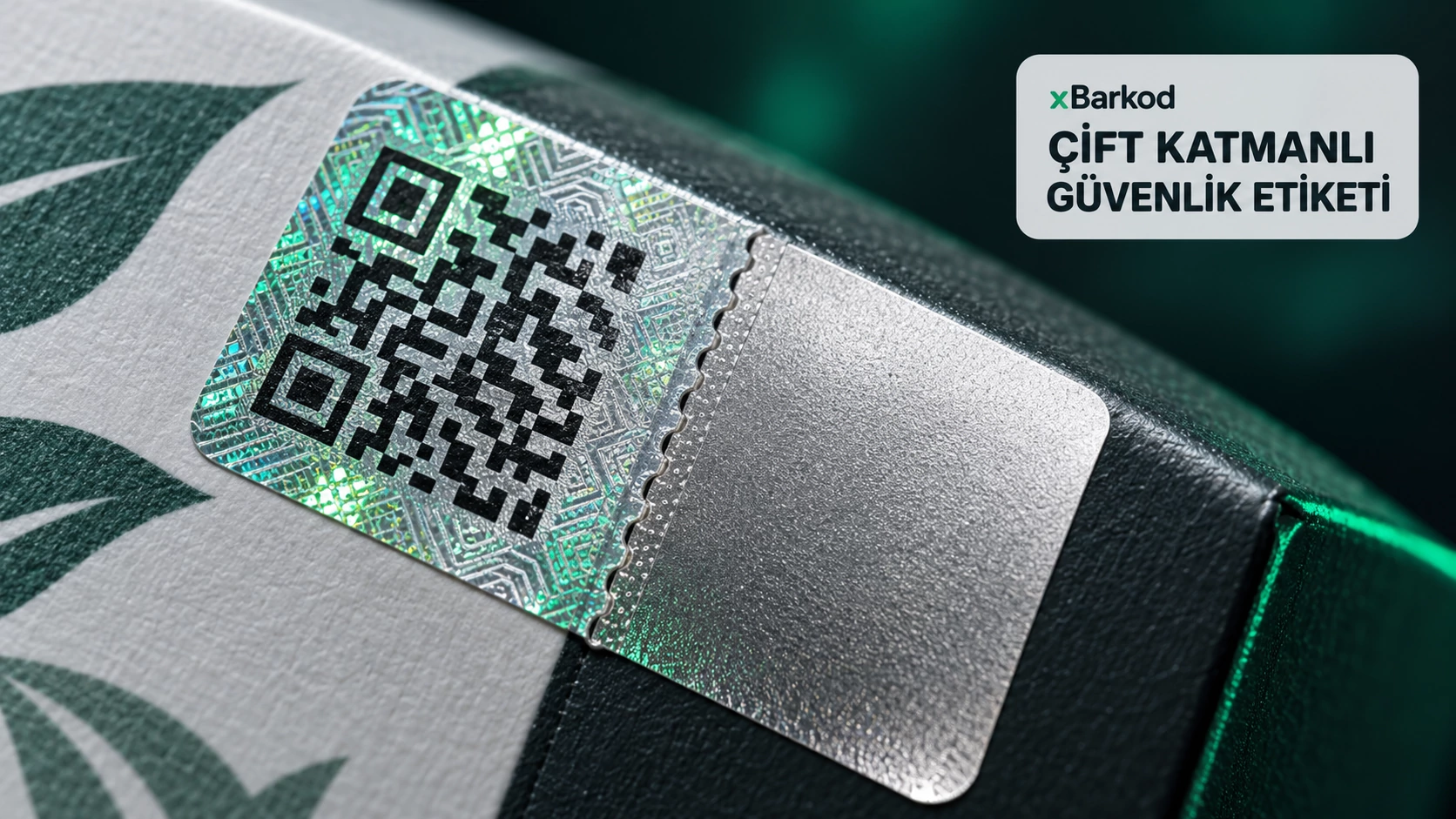
A visible QR code can take the customer into the correct authentication flow, but it does not prevent copying by itself. A concealed layer such as a scratch-off PIN can remain separate from a photographed visible surface. The product security label selection guide connects physical and digital decision criteria.
4. Separate a shared barcode from item-level identity
A shared barcode appearing on every pack of the same product usually identifies a class of goods. A counterfeit-prevention plan may need to distinguish one physical item from another. The appropriate level—product class, batch, serial, or individual instance—should therefore follow the business objective.
The GS1 Global Traceability Standard explains how class-, batch-, and instance-level identification provide different visibility. Item-level identity can distinguish one instance, but it still requires a dependable lifecycle for assignment, activation, cancellation, and archiving. A unique string without those controls is not a complete protection system.
5. Make customer authentication understandable
Customers should know what to do when they see the label and what the result means. A first authentication, previously used code, incorrect PIN, and invalid record need distinct messages. A vague success screen can weaken confidence if it does not explain which code or managed product record was checked.
An authentication result does not remotely prove chemical composition, regulatory conformity, or the physical condition of an item. Messaging should remain limited to what the system actually checks, such as code validity and prior use. A suspicious result should also offer a clear support route and state which photographs or purchase details are useful.
6. Connect authorised channels to field activity
A valid code does not automatically show that a product is in the expected sales channel. Dispatch, distributor or dealer, order, and authentication records should be interpreted together. An unexpected seller or location may change review priority, but it should not be treated as conclusive evidence on its own.
For online channels, preserve the listing link, seller account, order time, delivered item, and authentication history in one case. The guide to tracking counterfeit products sold online shows how to move from listing observation to a test purchase and evidence-based review.
7. Route suspicious signals into a standard case record
A prevention system is incomplete if it does not define what happens after an alert. A customer complaint, code repeat, unexpected location, or packaging difference should enter one case record. The record should preserve who added each item of evidence and what supported the final decision.
- Capture the initial report, date, and product reference.
- Use a protected code reference instead of copying the full value into open files.
- Compare manufacturing, dispatch, seller, and order records.
- Show reasonable explanations and missing evidence separately.
- Close the case with a defined outcome such as explained, insufficient evidence, confirmed issue, or action required.
- Feed recurring findings back into product, channel, and control design.
8. Test the controls on real packaging
A pilot must test the complete workflow, not just whether a phone reads the QR code. Prepare scenarios for correct first use, a customer recheck, an incorrect PIN, a cancelled code, a wrong product-code match, an unexpected region, and a support request. Define the expected customer message, dashboard record, and staff action for each one.
Acceptance criteria should be measurable within the company's process. Teams can assess readability after transport, concealment of protected information, retrieval of the correct product record, routing to an authorised reviewer, and evidence-based closure. Unsupported success percentages or sales results should not be used as pilot targets.
Where does xBarkod fit in the prevention plan?
xBarkod supports a unique QR code and concealed scratch-off PIN for each product. A customer can authenticate through the xBarkod App, while code validity and previous use can be checked. Company users can review authentication activity with product, time, and location information to make events requiring attention more visible.
These functions do not replace manufacturing control, channel records, or incident review; they add item-level activity to those controls. After defining risks and owners for one product family, evaluate the xBarkod product authentication and brand protection system in a limited pilot using final packaging, normal use, and suspicious scenarios.
What does a counterfeit-prevention system not guarantee?
No label or software can guarantee that it will discover every counterfeit or eliminate counterfeiting. Visibility declines when a code is linked to the wrong item, customers do not authenticate, channel records are outdated, or the company leaves alerts unreviewed.
Digital authentication is not a legal conclusion, laboratory analysis, or certificate of regulatory conformity. Trade mark protection, supplier oversight, packaging controls, online monitoring, customer support, and specialist examination where needed should work together. Technology is most useful when it connects these controls in a repeatable, evidence-based workflow.
Frequently asked questions about counterfeit prevention
Can one QR code prevent counterfeit products?
No. A QR code provides access to information and authentication, while its visible surface can be copied. It should be designed with unique identity, concealed information, reliable product-code matching, use history, and case review.
Which is more effective, a hologram or a QR code?
They can perform different tasks. A hologram may offer a visible physical check, while a managed QR code can open a digital record. Choose according to the copying risk, the person performing the check, and the process that follows an alert.
Why use a scratch-off PIN?
A scratch-off area keeps information separate from the visible QR code and concealed until first use. This adds a control against copying only the visible surface, but it does not by itself establish the condition or authenticity of the physical product.
Is a shared product barcode the same as a unique code?
No. A shared barcode may identify a product class. A unique code is designed to connect one physical product instance to a managed record and its use history.
Does a repeated code prove counterfeiting?
No. A customer recheck, support task, or return may explain it. An unresolved repeat is a risk signal to review with time, location, order, dispatch, and product records.
How can outsourcing brands reduce counterfeit risk?
The brand and manufacturer should reconcile production orders, packaging and label delivery, waste, destruction, code assignment, batch closure, and dispatch. Contracts and quality processes need to identify the owner of every duty and record.
How do you know whether a pilot succeeded?
Predefined normal and suspicious scenarios should create the expected result on the customer screen, company dashboard, and staff workflow. Product-code matching, label durability, alert routing, and evidence-based case closure should be confirmed in records.
Conclusion: Manage the control chain, not one label
Counterfeit prevention begins by keeping the genuine product identifiable and explainable from the production order to the customer. When supply records, packaging integrity, item identity, customer authentication, channel context, and case decisions meet in one plan, the brand can act earlier and more consistently.
Start with one product family, one packaging format, and a limited channel. Document risk scenarios, control owners, and required evidence, then test xBarkod's unique code, scratch-off PIN, prior-use check, and dashboard visibility within that real process. Use the pilot evidence—not a generic promise—as the basis for expansion.
More Articles
Food Lot Tracking: A Practical Guide from Records to Recall Readiness
Build food lot tracking with current batch rules, linked ingredient-production-dispatch records, recall drills, and item-level authentication controls.
QR Code Authentication for Textile Products: An E-Commerce Brand's Daily Workflow
Learn how an e-commerce textile brand manages QR authentication through product coding, label application, dashboard review, and suspicious-use checks.

Counterfeit Product Detection Systems: From Signal to Decision
Learn how to build a counterfeit product detection system using item identity, authentication signals, channel records, case review, and a controlled pilot.