Food Lot Tracking: A Practical Guide from Records to Recall Readiness
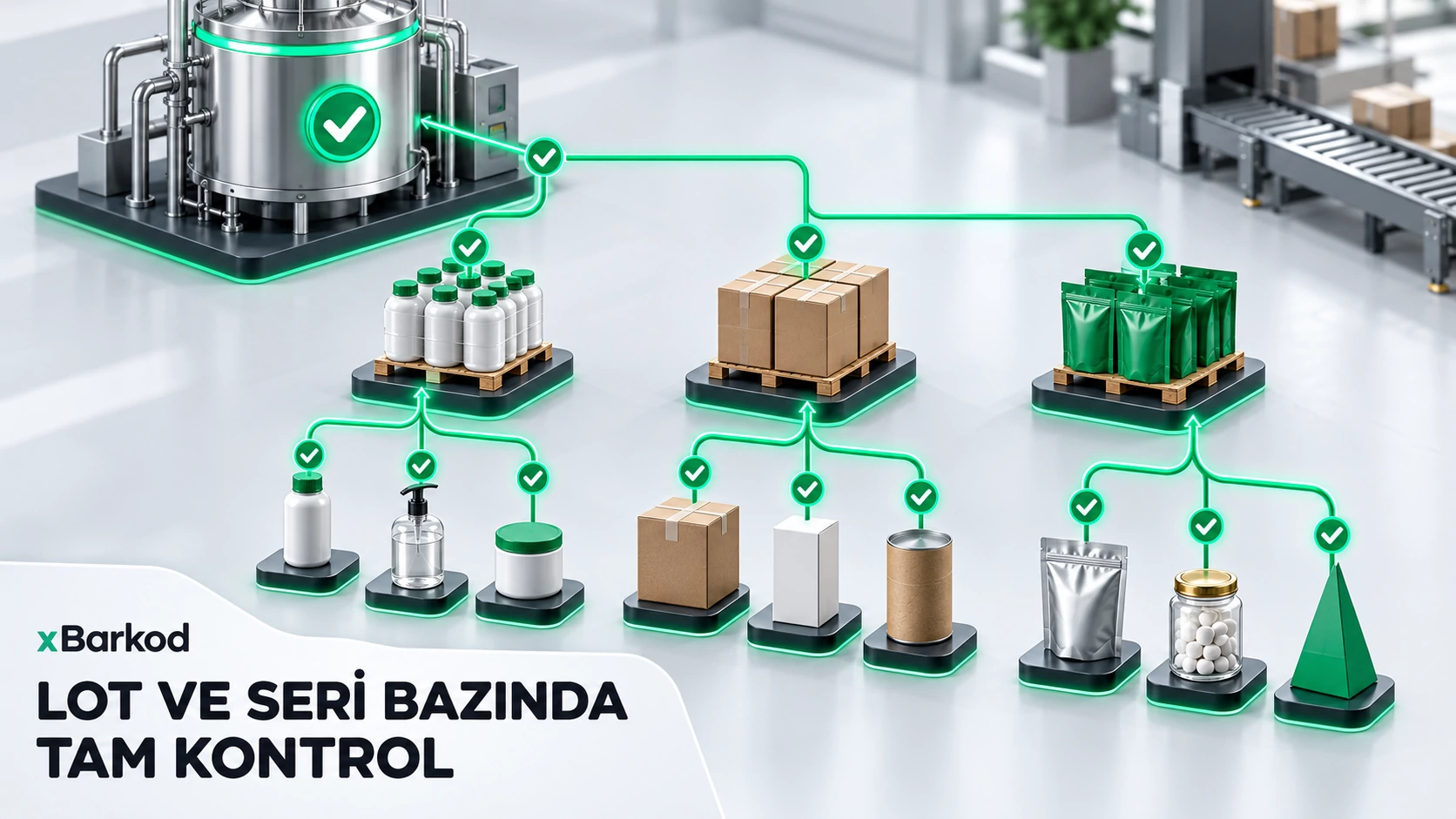
Food lot tracking is the record structure that preserves a batch identity from raw-material receipt through production, packing, storage, and dispatch. A dependable system can answer three practical questions with evidence: which inputs went into this lot, under what production context was it made, and where was it sent?
This guide goes beyond printing a batch number on a pack. It explains the decisions and records behind that number, then separates batch-level traceability from item-level product authentication. A food manufacturer can therefore connect the two layers without treating inventory records, regulatory marking, and brand-protection signals as if they performed the same job.
What is the difference between lot and serial tracking?
A lot or batch identity follows a group produced under defined conditions. A serial or item identity distinguishes one physical unit from every other unit in that batch. Batch records support production review, quality investigation, inventory control, and recall scope. Item identities support authentication and the review of activity associated with a particular pack.
The two levels can work together. A producer may manage a production batch with one lot number while linking a different authentication code to each retail pack. The essential design requirement is navigation in both directions: from an item code to its lot and from that lot to relevant ingredients, process records, inventory, and dispatches.
| Identity level | Core question | Primary use |
|---|---|---|
| Lot or batch | Under which conditions was this group produced? | Production, quality, inventory, and recall scope |
| Individual item | Which record belongs to this physical pack? | Authentication, prior-use review, and suspicious-activity investigation |
What changed in Türkiye's 2026 batch-marking rules?
Türkiye updated the rules for identifying the batch to which a food belongs through Turkish Food Codex Communiqué 2026/11, published on 11 March 2026. The Ministry's explanatory material notes a transition period for existing operators through 31 December 2026. Each business should still confirm the current product-specific application with its legal and quality teams.
The communiqué requires records showing that the lot number or mark used on the label was assigned in line with the rule and can be provided to the Ministry when requested. The relevant food producer assigns the lot identity. Where production, best-before, or use-by dates serve as the lot number, the label must make clear which date performs that function.
Which data should a food lot record contain?
A lot number alone does not create traceability. It must connect the pack to the inputs actually used and to the movements that followed. The exact data set depends on the product and process, but a useful starting framework includes:
- supplier, ingredient name, and supplier lot,
- receipt date and incoming-control result,
- production order, date, line, and relevant process record,
- recipe or formulation version and approved changes,
- produced quantity, waste, and rework links,
- packing record and finished-product lot,
- warehouse movements, dispatch date, quantity, and recipient.
Ownership matters as much as the fields. Procurement may hold the supplier lot, production the consumed quantity, quality the release decision, and logistics the dispatched lot. A shared batch identity joins those records. Corrections should preserve an audit trail showing what changed, who changed it, and why.
How should backward and forward tracing work?
Backward tracing starts with a finished-product lot and finds the ingredients, suppliers, and process records behind it. Forward tracing starts with an ingredient or production lot and identifies affected finished goods, stock locations, shipments, and recipients. A robust design supports both directions; a production worksheet alone cannot reveal the full downstream scope.
Test the links with concrete questions. Which finished lots used a selected ingredient batch? How much of a finished lot remains in stock? Which dispatches carried it, in what quantity, and to whom? Can a returned pack be tied back to its initial movement? Answers should come from consistent records rather than personal memory.
How do you set up food lot tracking step by step?
Start by defining what opens and closes a lot, not by choosing a code format. If a recipe change, line clean-down, ingredient change, or new production order requires a new batch, document that decision rule. Otherwise, materially different conditions may be hidden under a single identifier.
- Define the event that opens and closes a lot for the product family.
- Make each lot identifier unique and prevent reuse.
- Link ingredient lots to the production order.
- Transfer the finished lot to the correct pack during packing.
- Record warehouse receipt, split, merge, and dispatch events by lot.
- Connect returns, nonconformities, destruction, and rework to the same chain.
- Run and document both backward and forward traceability tests.
The identifier may reflect an internal convention, but uniqueness and readability matter more than embedding excessive meaning in a predictable code. The identity printed on the label must exactly match the system record. Verify the first print at the start of production and again whenever product, artwork, or line settings change.
Can a QR code replace the lot number?
The presence of a QR code does not prove that lot data is accurate or that a product is authentic. A QR code is only as useful as the data and process behind it. One shared code that opens a general product page cannot distinguish every pack. Item-level authentication requires a unique identity linked to each physical unit.
An item-level authentication label also does not replace mandatory lot marking, food-safety records, or the manufacturer's recall procedure. A sound design preserves the batch identity in regulatory and production records, then uses unique authentication as an additional layer for checking the relationship between a physical pack and a brand-defined item record.
Where does xBarkod fit into a food lot-tracking system?
xBarkod supports a unique QR code and scratch-off PIN for each item, customer checks through the xBarkod App, and company-side monitoring of authentication activity. Product, prior-use, time, location, and suspicious-activity information can be reviewed in the dashboard. These are item-level signals that complement the producer's own batch and dispatch records.
The manufacturer must place each authentication code in the correct product and lot context and control the risk of a label reaching the wrong line or package. When customer activity can be connected to the relevant batch record, a team can move beyond seeing an isolated alert and review the production and distribution context. That connection should be tested rather than assumed.
Begin with one product family and test the security-label application workflow together with the item-to-lot relationship. The goal is not to replace the statutory batch system. It is to add an explainable customer-authentication signal to the manufacturer's investigation process.
How should a recall drill be designed?
Recall readiness is more than having a procedure document. Select a lot and run records both backward and forward. The team should identify affected inputs, remaining inventory, dispatched quantities, and recipients. It should also reconcile quantities so that receipt, production, waste, stock, dispatch, return, and disposal movements have an explainable balance.
Assess record quality as well as the final result. Note missing links, one code used for different meanings, manual-transfer errors, and decisions without a named owner. If xBarkod authentication events are included, treat them as supporting field signals. They do not, by themselves, determine food safety or recall scope.
What are the most common lot-tracking failures?
The most common failure is printing a batch number without connecting production and dispatch records behind it. Other risks include reusing an identifier, losing the link when goods are split or repacked, omitting the supplier lot, and failing to connect a return with its original shipment.
- Leaving lot boundaries to operator interpretation,
- skipping first-print verification after a changeover,
- overwriting an incorrect record without an audit trail,
- failing to record lot selection at dispatch,
- testing only the backward direction,
- mistaking a QR code for the underlying lot record.
Written decision rules, mandatory fields, access controls, and regular traceability drills reduce these weaknesses. Buying software is not the complete solution. Production, quality, logistics, and customer support must work with the same identity model and escalation process.
Which acceptance criteria belong in a pilot?
Keep the pilot to one product family, one line, and a limited distribution route. Under real operating conditions, test movement from ingredient lot to finished product, from finished lot to recipient, and from a selected pack to its authentication activity. Include controlled exceptions such as a wrong label, reused code, return, and record correction.
Approve the pilot based on complete links, consistent printing and scanning, explainable quantity balances, prevention of unauthorised changes, and routing to the right decision owner. The batch and serial tracking guide provides a deeper comparison of identity levels.
Frequently asked questions about food lot tracking
Who assigns the lot number?
Under Türkiye's 2026/11 communiqué, the relevant food producer assigns the batch or lot number. Responsibilities for imported goods or other production models should be confirmed for the product under current rules and contracts.
Can the production date serve as a lot number?
The rule permits a production, best-before, or use-by date to serve as the lot identifier under defined conditions. The label must clearly state which date is being used as the batch or lot number.
Does every pack need a different lot number?
No. A lot identifies a group produced together. If the business needs to distinguish every physical pack, it can add a unique serial or authentication code alongside the shared lot identity.
Does lot tracking detect counterfeit products?
Lot records show production and distribution history; they do not independently prove a counterfeit. Item authentication, packaging review, channel records, and other evidence must be assessed together.
Does a QR security label automate a recall?
No. A QR code can simplify access to an identity, but recall decisions and scope depend on production, quality, inventory, dispatch, and risk records. Authentication activity can add field context.
How often should lot traceability be tested?
Frequency should reflect product risk, process changes, and the company's documented procedure. Repeat a two-way test when records, software, suppliers, lines, or packing workflows materially change.
Conclusion: Manage the record chain, not just the number
The value of food lot tracking lies in an unbroken path from the code on a pack to production and dispatch evidence. Confirm the current marking obligations for the product, define lot boundaries and record owners, and preserve an audit trail for corrections. Then assess unique xBarkod authentication as a complementary brand-protection signal within that batch-control structure.
More Articles
QR Code Authentication for Textile Products: An E-Commerce Brand's Daily Workflow
Learn how an e-commerce textile brand manages QR authentication through product coding, label application, dashboard review, and suspicious-use checks.

Counterfeit Product Detection Systems: From Signal to Decision
Learn how to build a counterfeit product detection system using item identity, authentication signals, channel records, case review, and a controlled pilot.

What Is a Product Security Label? Layers, Workflow, and Setup Guide
What is a product security label? Learn how QR codes, scratch-off PINs, packaging controls, dashboard records, and a practical rollout work together.