What Is a Product Security Label? Layers, Workflow, and Setup Guide
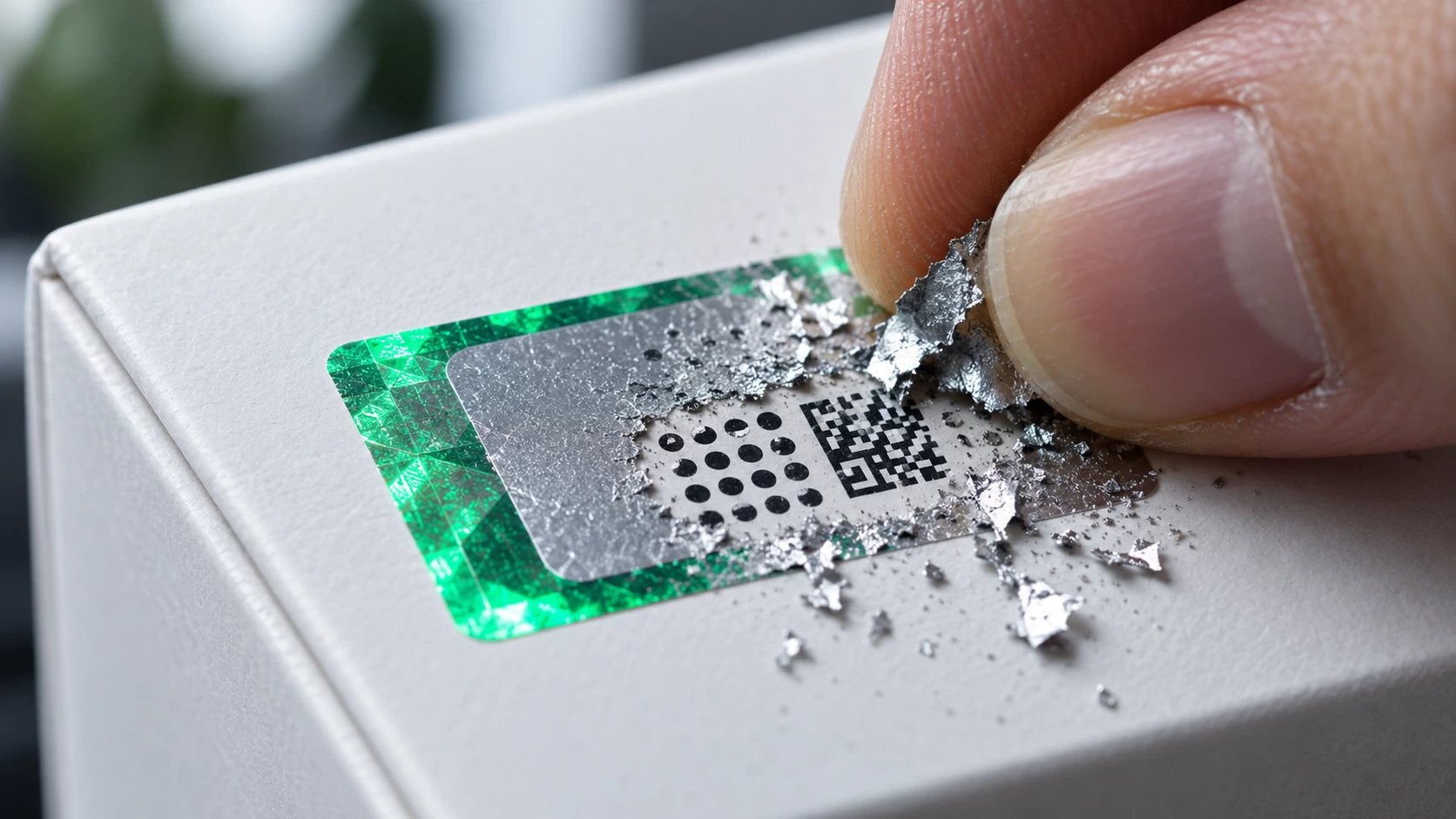
A product security label is a control placed on a physical product or package to reveal interference, connect the item to an identifiable record, or let a user perform an authentication check. Its value comes from the evidence it creates against a defined risk, not from appearance alone.
A hologram, destructible material, QR code, and scratch-off area do not perform the same job. One may reveal opening or removal; another connects a specific item to a digital record; another keeps information concealed until first use. These functions are related but not interchangeable.
This guide separates security labels from ordinary product or price labels and explains how physical, digital, and operational layers work together. The objective is not merely to buy a label. It is to manage the connection between product and code from packing through customer authentication.
What exactly is a product security label?
A product security label performs a control against a defined threat. That threat may be unauthorised opening, transfer of a label to another item, copying of a visible code, or reuse of the same product identity. The label should create an observable sign or queryable record about at least one such event.
This definition matters because not every label displaying a product name, ingredients, or price is a security label. A shared QR code that opens a brand page is not item authentication by itself. A reviewable connection must exist between the physical item and a record managed by the brand.
- Identification: States which product, package, batch, or individual unit the label belongs to.
- Tamper evidence: Makes an opening, removal, or transfer attempt physically visible.
- Authentication: Allows visible or concealed information to be checked against a brand record.
- Event record: Brings time, use history, and where appropriate location context into a review.
Which three layers make a security label work?
A functional model combines a physical label, a digital record, and a company process. The physical layer sits on the pack. The digital layer holds the product connection and authentication history. The operational layer defines who applies the code, controls unused stock, and reviews a warning.
A physical feature alone cannot show digital use history. A digital code alone may not reveal that a label was attached to the wrong pack or copied. Without an operating process, even a useful signal can remain unresolved because no team or supporting record has been assigned.
| Layer | Main role | Limit when used alone |
|---|---|---|
| Physical | Attach the control to a pack and provide tamper evidence or concealment | Does not show digital use history |
| Digital | Connect the code with a product record and authentication event | Cannot prevent every incorrect physical application |
| Operational | Manage application, waste, voiding, and incident review | Cannot create evidence without the right label and records |
How does a product security label work?
The workflow starts by defining the protected product and identity level, not by printing artwork. One shared code for a product family and one unique code for every saleable pack create different visibility. GS1's barcode overview explains that barcodes can carry identifiers and attributes such as serials, batches, and dates, while the appropriate carrier depends on the business requirement.
- Create the product record: Define the item and package that will carry the label.
- Generate the identity: Prepare a serial, unique code, or other authentication data for the risk model.
- Print and protect labels: Separate unused, damaged, and voided stock.
- Apply to the intended item: Check the connection between code and physical pack during production.
- Let the user authenticate: Scan the visible code and, when present, enter the information under the scratch-off area.
- Review the event: Make validity, prior use, and relevant context available to the responsible company team.
A broken link in this chain can create a misleading result. A valid code may be placed on the wrong product, a damaged label may remain active, or a genuine customer's repeat check may be treated as unnecessary alarm. Label, record, and review should therefore operate as one process.
Do a QR code and scratch-off PIN perform the same task?
No. A QR code is a visible data carrier that helps a phone reach the relevant digital record quickly. Because the image can be photographed, the mere presence of a QR symbol is not sufficient control against copying. Code uniqueness and use history must also be managed.
A scratch-off PIN adds information concealed until the product reaches the user. If the visible QR code is copied remotely, an unopened hidden area provides a further check. The PIN still needs to match the correct product record, unused label stock must remain controlled, and the first-use result must be understandable.
QR, PIN, and tamper-evident material may be combined, but a layered appearance does not automatically create a strong process. The guide to copied QR codes explains how a visible carrier and concealed authentication data answer different risks.
What records can a company obtain from the label?
A label connected to digital authentication can bring a product record and a query event together. The brand may review whether the code is valid, whether it has prior use, when the query occurred, and location context when it is available and permitted. These details are signals to investigate, not verdicts.
Repeated use may come from a customer checking again, a support test, or a copied code appearing on another package. A counterfeit conclusion should not be reached until time, product, order, dispatch, return, and support records have been read together.
- Which product and package record is the code connected to?
- When did the first and later authentication events occur?
- If location context exists, is it consistent with the intended market or dispatch?
- Is there an explanation involving a return, service case, sample, or internal test?
- Which team reviews the warning and which evidence closes the case?
Can a security label be applied to existing packaging?
Many security labels can be applied to an existing box, bottle, pouch, or other packaging surface. A universal suitability promise would still be unsafe. Material, coating, curvature, cleanliness, heat, and humidity can influence both adhesion and QR readability.
Placement is part of the security function. A tamper-evident label should cross the actual opening path. A QR code should not sit on a highly curved, reflective, or easily damaged area. The scratch-off section must survive transport while remaining clear and accessible to the user.
Run a trial on finished packaging before volume application. The security-label application field guide provides a detailed route for testing surface, placement, production handling, scanning, and waste control with real samples.
What does a product security label not guarantee?
No label eliminates every counterfeiting risk by itself. A physical feature can be imitated, a visible code can be copied, a valid code can be placed on the wrong pack, or company data can be recorded incorrectly. A security label makes selected risks visible and reviewable; context is still required for a conclusion.
A label does not analyse product contents like a laboratory, replace a quality certificate, or create regulatory compliance automatically. Mandatory markings, safety warnings, and registration duties for the product category must be assessed separately. A brand-controlled security label can sit above those obligations as an additional authentication layer.
ISO 22383:2020 provides guidance for selecting authentication solutions after a risk assessment and evaluating performance across the life cycle of a material good. This supports evaluating a technology against its defined purpose instead of treating it as a threat-independent decoration.
Where does xBarkod fit into this model?
The xBarkod product authentication system supports a unique QR code and concealed scratch-off PIN for every product. The customer scans the code with the xBarkod App and enters the PIN, allowing the system to check code validity and prior-use status.
Authentication events can be reviewed in the company dashboard with product, time, and location information, while suspicious activity can be examined alongside business records. The system does not remove the need to apply a label to the intended package or interpret an event responsibly. Value comes from joining the digital signal with a working process.
Start the evaluation with one product family and one risk question. A measurable xBarkod pilot can test product-to-code matching, first authentication, legitimate repeat use, deliberate mismatch, and a voided test code on real packaging.
Which setup controls should be written down?
A security-label project cannot belong to purchasing alone. Brand or quality teams should own the risk and acceptance criteria; production should own application and waste; information technology should own code status; and customer support should own authentication messaging and warning routes.
The starting record can be short but must be precise. State which products are in scope, the level at which a code is unique, where label stock is held, how a damaged code is voided, and who receives a dashboard warning. The product security label selection guide helps turn this definition into procurement and pilot decisions.
- Define the authorised source of product, package, and code data.
- Separate unused, applied, damaged, and voided label states.
- Reconcile printed, applied, rejected, and remaining labels after production.
- Write clear first-use, repeat-use, and error messages for customers.
- Assign an accountable team and review target for every warning type.
- Judge the pilot against your own acceptance criteria, not a universal claim.
Frequently Asked Questions about product security labels
Is every label with a QR code a security label?
No. A QR code that opens a shared web page can provide information without connecting an individual item to a unique record. Its purpose, product relationship, use history, and warning process must be defined before it performs a security function.
Can a security label identify a counterfeit with certainty?
It does not deliver certainty by itself. Tamper evidence, an invalid code, or unexplained reuse creates a risk signal. The company should compare that signal with product, dispatch, sale, return, and support evidence.
Are a hologram and digital authentication the same thing?
No. A hologram can provide a visual or physical check. Digital authentication connects a code to a managed record and may expose query history. They may be used together or separately according to the risk model.
Why is a scratch-off PIN used?
A scratch-off PIN keeps part of the authentication information concealed until first use. It adds a check against remote copying of the visible QR code, while controlled printing, stock protection, and product-code matching remain necessary.
Where should a product security label be placed?
Placement must match the purpose. Tamper evidence should cross the opening path; the QR code should remain flat and readable; concealed information should survive transport. Make the final decision after testing the finished package.
Why might the same security code be checked more than once?
A customer may check again, a support team may inspect the product, or the code may have been copied. Reuse is not proof by itself and should be explained with time, location, and company records.
Does a security label replace mandatory product labelling?
No. Required content, warnings, conformity information, and traceability details depend on the product category. A security label should be designed as an additional authentication and brand-protection layer.
Conclusion: Manage the label as a control system
A product security label is more than a graphic added to a package. It is a control point connecting the physical item, digital identity, and company decision. Its target risk, method of application, and accountable reviewer all need to be explicit.
Begin with one product family instead of a broad transformation. Evaluate xBarkod's unique QR code, scratch-off PIN, prior-use check, and dashboard visibility in a measurable pilot using your real packaging and responsible teams.
More Articles
Food Lot Tracking: A Practical Guide from Records to Recall Readiness
Build food lot tracking with current batch rules, linked ingredient-production-dispatch records, recall drills, and item-level authentication controls.
QR Code Authentication for Textile Products: An E-Commerce Brand's Daily Workflow
Learn how an e-commerce textile brand manages QR authentication through product coding, label application, dashboard review, and suspicious-use checks.

Counterfeit Product Detection Systems: From Signal to Decision
Learn how to build a counterfeit product detection system using item identity, authentication signals, channel records, case review, and a controlled pilot.