What Is a Product Authentication System? A Practical Guide for Brands
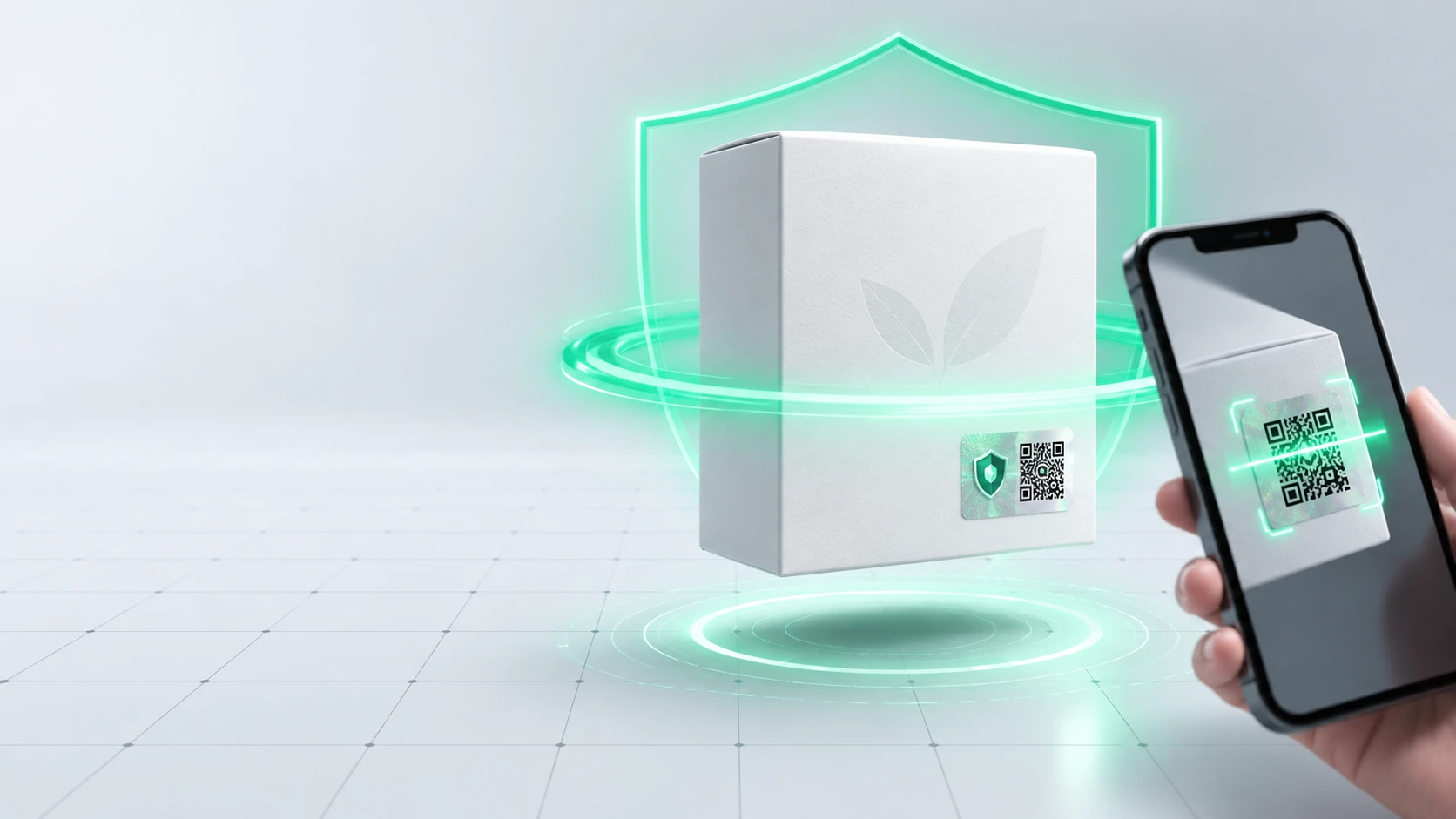
A product authentication system is a digital infrastructure that lets a consumer or business check whether a physical item matches a record created by the brand. An effective system does more than send every QR code to the same webpage. It assigns a unique identity to each item, records authentication events, and turns suspicious repeats into signals that authorized teams can review. Product authentication should therefore be considered not only as an anti-counterfeit measure, but also as a source of channel visibility and consumer confidence.
What does a product authentication system do?
Packaging, labels, and the visual appearance of a product can be copied. The operational challenge is to build a verifiable connection between the physical item seen by the customer and the digital record controlled by the brand. A product authentication system creates that connection through a unique code. When the code is checked, the system can evaluate the product record, its previous authentication history, and any additional security factor.
The system creates different value for three groups. Consumers gain a quick way to check a purchase. Brand owners can observe when and where protected items are authenticated. Operations teams receive structured signals for investigating repeated scans or activity that does not fit the expected distribution path. Authentication is not, by itself, legal proof, a quality certificate, or a guarantee that counterfeiting will disappear. It can, however, convert scattered complaints into consistent and reviewable data.
Is a standard QR code the same as product authentication?
No. A standard QR code usually opens the same URL on every package. If the graphic is copied, a counterfeit package may open that page as well. In an authentication system, every item or defined production unit has a separate digital identity. When a scratch-off PIN is added, copying the visible QR code alone is not enough to complete the full verification process.
| Method | Main function | Operational limitation |
|---|---|---|
| General QR code | Opens a webpage | Does not provide item-level identity or usage history |
| Serial number | Matches an item to a record | Manual entry may create friction for consumers |
| QR code plus hidden PIN | Checks a visible and a concealed factor | Requires careful label and packaging operations |
How does the authentication process work?
- Create the product record: The brand defines the product family and the operational information required for the program.
- Generate a unique identity: A separate authentication record is created for every item, serial group, or defined production unit.
- Apply the label: The QR code remains visible while the PIN, when used, stays under a scratch-off layer.
- Let the customer authenticate: The customer scans the QR code and enters the concealed information if requested.
- Display a clear result: The system checks the record and presents an understandable response.
- Send the event to the company panel: Time, location, and repeat information become available to authorized teams.
Software is only one part of this workflow. The label must be applied to the correct item, unused codes must be protected, and procedures are needed for damaged labels, returns, production waste, and destroyed inventory. Without these controls, a reliable digital record can still be weakened by a gap in the physical operation.
Which companies need product authentication?
The risk is not limited to luxury goods. Cosmetics, supplements, food, textiles, electronics, spare parts, batteries, medical products, and private-label goods may all require authentication for different reasons. The need is particularly visible when demand is high, distribution involves multiple dealers, or customers need confidence about product identity and handling.
Brands using contract manufacturing face an additional question. When production takes place at a third-party facility, the business must decide when codes are generated, who applies the label, and who controls unused inventory. Buying labels without defining responsibility among the manufacturer, packer, warehouse, and brand team does not create a complete authentication program.
What should a brand evaluate before choosing a system?
- A genuinely unique code for each item or defined production unit
- A concealed authentication factor in addition to the visible QR code
- The ability to check whether a code has already been used
- Time and location context for authentication events
- Clear alerts that help teams review suspicious repetition
- Labels that can work with the existing package and production flow
- Role-based access, data security, and auditable records
- A simple consumer experience that can be completed in a few steps
Comparing only the unit price of a label can produce the wrong decision. Total cost should include application labor, process changes, panel operation, staff training, and the ability to support growing product volume. A pilot should use real packaging, a real production line, and different consumer devices.
A practical implementation roadmap
Instead of protecting every product at once, begin with a product family that has meaningful risk and a distribution path that can be observed. Then define the objective. Consumer authentication, detection of out-of-channel movement, and post-authentication engagement may all belong to the same program, but each requires different success criteria.
After selecting the pilot item, document code ownership, label application, damaged-label handling, returns, destruction, and the review of suspicious events. Give panel access only to relevant roles and train customer service teams to explain different authentication results accurately. Expansion should follow a review of the pilot rather than an automatic rollout.
Where does xBarkod fit?
The xBarkod product authentication and brand protection system supports unique QR codes with scratch-off PINs, consumer authentication, and monitoring of verification events through a company panel. Previous code use, time and location context, and suspicious activity can be reviewed within one operational framework. Security labels designed for existing packages also make it possible to plan a pilot without rebuilding the entire production environment.
Evaluate the solution through your own packaging, production volume, distribution network, and customer behavior. A defined pilot creates a stronger business case than a decision based on broad promises.
Frequently Asked Questions
Can a product authentication system eliminate counterfeits completely?
No single tool eliminates every counterfeit risk. Authentication gives consumers a way to check an item and gives the brand data for reviewing suspicious activity. Its effectiveness grows when it is combined with secure labels, controlled operations, and a clear response process.
Why use a PIN in addition to a QR code?
A visible QR code can be photographed and copied. A PIN concealed under a scratch-off layer provides a second factor that is not easily available before purchase, making the copied QR graphic insufficient by itself.
Does the consumer need special equipment?
The consumer process can normally be completed with a camera-equipped smartphone. Equipment required on the company side depends on the label application method and the design of the production line.
Can a contract manufacturer apply the labels?
Yes, provided that the responsibility is defined in contracts and operating instructions. Delivery of codes, unused labels, waste, damaged items, and destruction records should remain auditable by the brand owner.
Which teams can use authentication data?
Quality, operations, supply chain, customer service, and brand protection teams may use the data with different permissions. Access should be limited by role, and personal data should be managed under applicable obligations.
How long should a pilot last?
There is no universal duration. It should cover enough distribution and customer activity to reveal authentication behavior, operational errors, and the quality of the review workflow.
Conclusion: design the process before the label
Product authentication is not simply a decision to place a QR code on a package. The brand must design how identities are created, who applies each label, what result the customer sees, and which team investigates a suspicious event. Review the xBarkod operating model and define a limited pilot product group to test the process with measurable operational criteria.
More Articles

How to Prevent Counterfeit Products: 8 Lifecycle Controls
Learn how brands can prevent counterfeit products with eight practical controls spanning suppliers, packaging, unique identity, channels, and incident review.
Food Lot Tracking: A Practical Guide from Records to Recall Readiness
Build food lot tracking with current batch rules, linked ingredient-production-dispatch records, recall drills, and item-level authentication controls.
QR Code Authentication for Textile Products: An E-Commerce Brand's Daily Workflow
Learn how an e-commerce textile brand manages QR authentication through product coding, label application, dashboard review, and suspicious-use checks.