Product Authentication Code Mapping: A Daily Workflow for Private Label Brands

A successful scan can still create the wrong business signal. If a label on a private label product opens the record for another variant, the code works technically but the surrounding control has failed. The brand needs evidence that the authentication identity belongs to the physical item in hand.
That relationship starts at manufacturing acceptance and is tested again when a customer authenticates the product. The event becomes useful for daily decisions when the brand can trace it to the correct item, variant, package, and acceptance record.
xBarkod brings a unique QR code, concealed scratch-off PIN, prior-use check, and company-dashboard visibility to this flow. Approved brand data, disciplined contract application, and acceptance controls keep the product-to-code relationship accurate.
Mapping starts with the product record, not the scan
A shared barcode can identify a product type, while a unique authentication code distinguishes the activity around a particular physical package. Treating those identities as interchangeable can place similar variants or package versions under the wrong record.
Private label products and packaging may be prepared outside the brand's own facility. Unless the approved brand record and the manufacturer's label application share a traceable reference, customer results, dashboard events, and support evidence can become difficult to reconcile.
Correct mapping does not produce an automatic verdict about counterfeiting. It creates a dependable starting point for reviewing a specific authentication event against the right product and package record.
Passing the approved brand record to the manufacturer
Before labels reach the application area, the brand should approve the product name, variant, package version, and internal reference. Similar-looking items need an explicit distinction whenever their content or packaging requires a separate authentication record.
The contract manufacturer's stock code may differ from the brand's sales code. That is manageable when both sides can find the approved physical product behind each unique authentication identity. The shared reference should be clear without relying on package appearance alone.
A concise mapping record can include:
- The approved product and variant description
- The package version and surface receiving the label
- The reference connecting brand and manufacturer records
- The owners of label application and acceptance
- The handling route for rejected, damaged, or unused labels
Keeping labels with the right item on the manufacturing floor
Security labels should enter the application area only when the intended product is ready and identified. Product changeovers, packaging revisions, and work handoffs can leave labels near the wrong item. Brand acceptance controls need to make that risk visible.
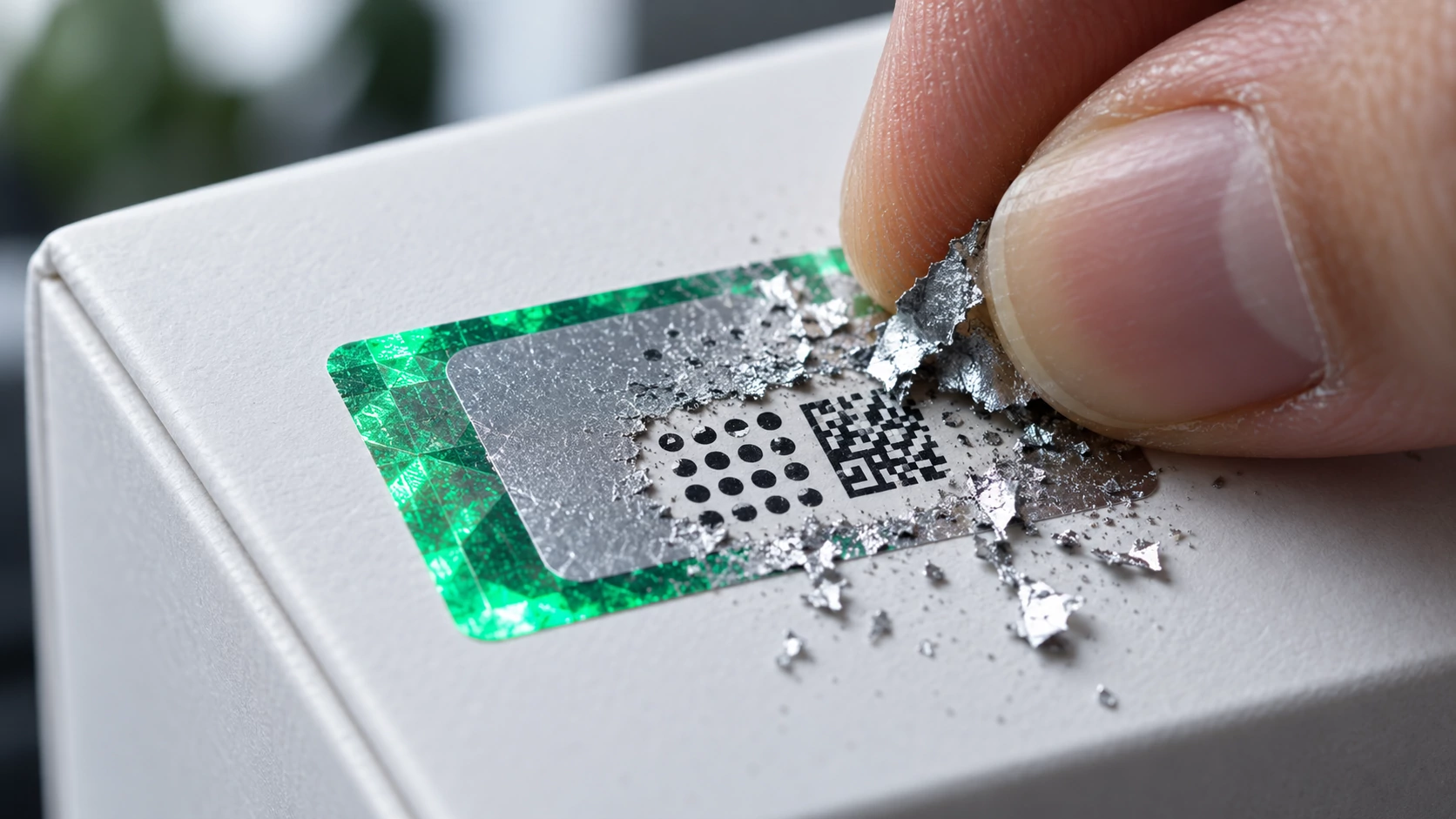
xBarkod security labels can be applied to existing packaging. Placement still involves more than adhesion and scanning. The QR code needs to remain visible, the concealed PIN should stay covered until customer access, and the label must retain its link to the correct product record.
During acceptance, the product description, label, and approved brand record can be reviewed together on finished packaging. The purpose is not to claim a performance result. It is to create an everyday control that can find an incorrect mapping before the item enters a sales channel.
Customer activity tests the mapping in the field
In the xBarkod flow, the customer scans the QR code in the app, enters the hidden PIN beneath the scratch-off area, and views the authentication result. The system checks whether the code has been used before, and the activity becomes visible to the company.
For a private label brand, the practical benefit is the ability to compare a customer report with a specific authentication record instead of leaving it as a general product complaint. Accurate mapping gives support teams a clearer view of the package and use history under review.
The result does not establish every physical property of the item. It is a signal about the code's relationship to the brand-defined record and its prior-use status, which should be assessed with product, purchase, and packaging evidence.
Reading dashboard activity beside product records
The xBarkod product authentication system supports monitoring authentication events with product, location, and time information and helps companies notice suspicious activity. A private label brand can interpret that visibility alongside manufacturing acceptance, dispatch, return, and customer-support records.
The product shown in the dashboard is the first mapping checkpoint. Prior-use status, authentication time, and available location then add context. Unexpected activity is not an immediate counterfeit decision; it is a review signal that the brand should attempt to explain with its records.
A daily review can follow this sequence:
- Compare the dashboard product record with the approved item and package
- Check prior-use status and the authentication result
- Review time and available location against dispatch and sales context
- Find the related acceptance, order, return, or support record
- Escalate unresolved activity with product and packaging evidence
A record error and suspicious use are not the same problem
An unexpected product context does not always mean that a code was copied. A label may have reached the wrong variant, a package record may be outdated, or brand and manufacturer references may have been confused. Each can create a mismatch that requires correction.
Suspicious-use review becomes relevant when a previously used code appears in an unexpected place or unexplained activity gathers around the same identity. The dashboard signal, mapping record, and commercial movement should be read together before the brand reaches a conclusion.
A sound approach begins by checking for record and application errors. Once product and package mapping is confirmed, the team can assess use history, time, location, dispatch, returns, and the customer report. Operational mistakes and possible identity misuse then remain separate investigation paths.
Assigning the daily work to each party
The manufacturer applies the label to the physical product, while the brand owns the approved product record and the method for reviewing authentication events. If either responsibility is assumed to belong entirely to the other party, the source of a mismatch may remain unclear.
A simple division of work keeps daily decisions consistent:
- The brand approves product, variant, and package records
- The manufacturer applies labels against the approved product reference
- The quality or acceptance owner checks the physical product-to-code link
- Customer support records the result and reported package details
- The authorised brand team reviews dashboard activity with commercial evidence
These responsibilities separate xBarkod's technical authentication role from the brand's operating decision. The platform makes the code and event visible; correcting an application error or choosing the next step for a suspicious event remains part of the recorded brand and manufacturer process.
Where xBarkod fits in the workflow
xBarkod's verified role is to provide a unique QR code and hidden PIN for each product, enable customer authentication, check prior use, and make authentication activity visible in the company dashboard. This layer does not replace product master data or manufacturing acceptance.
For a private label brand, the value lies in reviewing records created by different parties around the same event. The manufacturer applies the identity, the brand owns product context, and the customer creates the authentication event. The dashboard brings product, time, and available location context back to the brand.
A business evaluating the solution can examine mapping, QR and hidden PIN flow, prior-use visibility, and escalation of suspicious activity on finished packaging. Reviewing the xBarkod authentication workflow together with brand controls helps it settle naturally into daily work.
Control points before broader use
The decision should not rely only on whether a label scans. The correct product record, concealed PIN flow, and the brand's ability to explain the dashboard event should all form part of acceptance.
- Does the code connect to the correct product, variant, and package record?
- Does the QR remain readable while the PIN stays concealed before sale?
- Can the customer understand a prior-use result?
- Can product, time, and available location be reviewed together?
- Can a mapping error be found through manufacturing and acceptance records?
- Is there a clear owner and evidence path for suspicious activity?
Related guides cover creating unique product codes, private label product safety, and reviewing suspicious authentication activity.
Frequently Asked Questions about authentication code mapping
What is product authentication code mapping?
It is the connection between each unique authentication identity and the correct product, variant, and package record. This allows customer checks and dashboard activity to be reviewed in the context of the right physical item.
Can a shared product barcode replace a unique authentication code?
No. A shared barcode may identify a product type, while a unique authentication code distinguishes the use history and authentication activity of a particular physical package.
Does an unexpected product record prove counterfeiting?
Not by itself. Incorrect label application, an outdated packaging record, or confused brand and manufacturer references can also create a mismatch. The physical product and business records require review.
How should a previously used code be assessed?
Prior use is a review signal. A repeat customer check, return, or support interaction may explain it, so product, time, available location, and commercial records should be read together.
Is dashboard location enough to make a decision?
No. Location is context for the authentication moment and does not have to match the purchase point. It requires comparison with dispatch, sales, return, and customer-report evidence.
Does xBarkod replace a contract manufacturing system?
No. xBarkod is an authentication layer for product identity, customer checks, prior-use status, and dashboard visibility. Manufacturing, inventory, quality, and acceptance records remain in the business's own systems.
Conclusion: From a readable label to an explainable product
Good mapping leaves no doubt about which physical item and manufacturing record the brand should inspect when a customer report arrives. Keeping the code, product record, and dashboard event in one context helps separate an application error from activity that remains unexplained.
The first move is not to apply more labels, but to fix a shared product reference between the brand and contract manufacturer. Once that link is confirmed on finished packaging, xBarkod's unique code, hidden PIN, and dashboard visibility can support daily review, with decisions still grounded in manufacturing and acceptance evidence.
More Articles

Product Authentication System Setup: A Daily Workflow for E-Commerce Brands
Set up product authentication with clear records, unique codes, QR and hidden PIN checks, dashboard review, and suspicious-use handling for e-commerce brands.

Product Authentication Location Tracking: From Setup to Daily Review
Build product authentication location tracking with clear permissions, data quality, daily review, privacy controls, and practical pilot criteria.
How Does a QR PIN System Work? Data Flow and Control Points
Learn how a QR PIN system connects item identity, QR scanning, hidden-code validation, prior-use status, and brand-side event review step by step.