QR Code Security Label Pricing: A Guide to Comparing Quotes
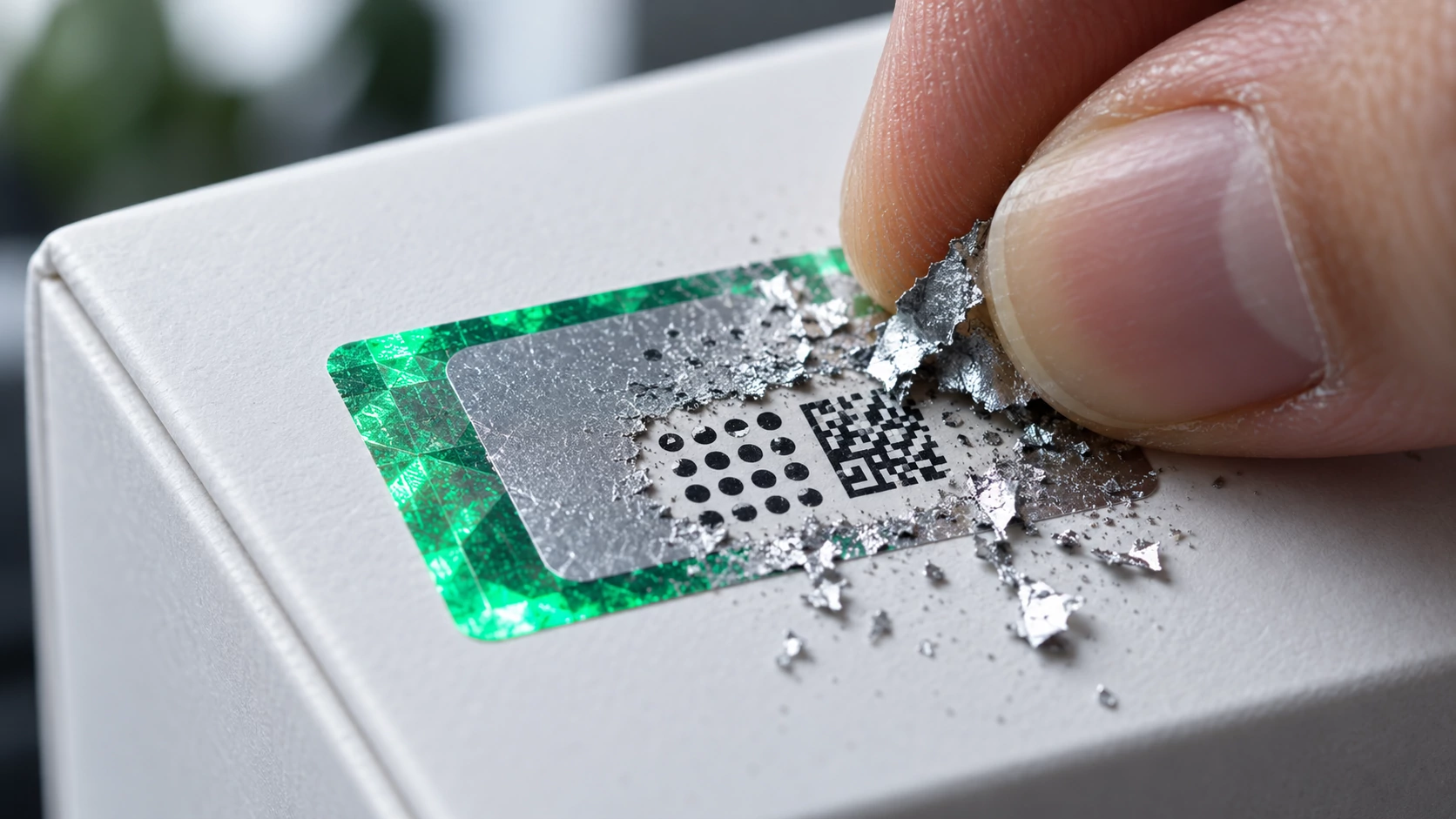
QR code security label pricing depends on far more than label size and stock. Unique data for every item, a concealed scratch-off PIN, adhesive selection, print verification, waste handling, and the digital authentication service may all be separate parts of a quote. A fair comparison therefore starts by sending the same specification to every supplier.
The first procurement question should not be limited to price per label. Two proposals may describe different products unless the brand defines the risk to expose, the packaging surfaces involved, who creates the codes, and how field checks will be recorded. This guide helps buyers request comparable prices without inventing market figures.
What does the search for QR code security label pricing reveal?
Current Turkish search results commonly present QR label prices through size, quantity, material, printing, and cutting choices. Those inputs can be a useful starting point for a standard link label. Product authentication adds decisions about variable identities, concealed information, code-to-product assignment, and authentication history.
Buyers must therefore separate two requirements: printing the same QR image on many labels and assigning a different authentication identity to each saleable item. The first can send every user to a shared page. The second is designed to distinguish a particular pack and its authentication activity. A unit price is misleading when the proposal does not state which requirement it covers.
A standard QR sticker and a security label are not the same product
A standard QR sticker usually carries a shared destination. A QR security label may connect the physical label to an item identity, concealed authentication information, and a server-side record. Not every application needs a scratch-off PIN or tamper-evident material; the appropriate layer depends on the threat and the package.
| Quote element | Standard QR label | Authentication label |
|---|---|---|
| Code structure | The same link may appear on every label | Data can vary by item or serial |
| Concealed information | Usually absent | A scratch-off PIN may be added |
| Data record | May stop at a landing page | Code, product, and event can be connected |
| Quality control | Sample scanning | Scanning, assignment, and uniqueness checks |
This distinction does not mean that the most expensive design is automatically the safest. The right choice depends on whether the brand needs to expose copying, opening, transfer, or repeated use. Defining the criteria in the guide to selecting a product security label can remove unnecessary features before suppliers quote.
Which inputs change a security label quote?
Separate physical production, variable data, and digital services when reading a proposal. Two labels of the same dimensions may require different production processes because their surfaces, durability, and authentication workflows differ. A quantity alone is not enough to create a comparable request.
- Size and shape: The usable area required for the QR code, instructions, and scratch panel.
- Surface and adhesive: Compatibility with board, glass, plastic, metal, or flexible packaging.
- Environment: Moisture, heat, cold, abrasion, oil, or outdoor exposure.
- Security construction: Scratch layer, tamper evidence, destructible stock, or another physical feature.
- Variable printing: A different QR, PIN, serial, or human-readable code on every label.
- Volume and batches: One production run versus scheduled partial deliveries.
- Quality control: Code uniqueness, readability, matching, and waste records.
- Digital scope: Code generation, activation, authentication, dashboard access, and support.
Ask which items are included in the unit price and which are setup or service charges. Artwork, samples, data preparation, freight, reprints, spare labels, and cancelled-code handling may need separate definitions. The objective is not to eliminate every cost; it is to expose scope differences before the purchase order.
Prepare a short label specification before requesting prices
A useful specification does not need to be long. A one-page brief can give each supplier the product, package, threat, data, and delivery information in the same order. Apply your organisation's confidentiality and data-transfer procedures before sharing commercial or product information.
- Identify the product families and packaging surfaces that will receive the label.
- State whether authentication happens before opening or after purchase.
- Specify whether QR data is shared or unique to every item.
- Describe any scratch PIN, tamper evidence, or destructible material requirement.
- Separate the initial order, repeat orders, and planned batch deliveries.
- List sample, pilot, scanning, and adhesion acceptance criteria.
- Ask how code files are transferred, retained, and retired when unused.
It is also useful to describe whether the package is flat, curved, textured, or difficult to bond. Application temperature may differ from storage and use conditions. Testing the proposed adhesive on the real package creates stronger purchasing evidence than relying on a catalogue description alone.
How do variable QR codes and concealed PINs affect scope?
Printing different QR data for every item requires a controlled data flow rather than simple duplication of one artwork file. Codes must be generated, assigned to the correct product records, transferred securely into print, and checked for accidental duplication. When a concealed PIN is used, the QR-to-PIN relationship becomes part of the same chain.
Do not accept ‘variable QR printing included’ as the only description. Ask who generates the codes, how the print file is delivered, how damaged or missing labels are retired, and how reprints are controlled. The guide to the QR code and scratch-off PIN workflow explains why the printed label and its digital record must be planned together.
Why must scanning and print verification appear in the budget?
A QR symbol that looks correct on a screen is not proof that every production label will scan in its intended setting. Size, contrast, quiet zone, glossy material, print resolution, encoded data, and package curvature can affect the experience. Sample scanning and production quality control should therefore be explicit parts of the request.
The GS1 implementation guideline for 2D barcodes advises brands to consider data structure, printing technology, substrate, line conditions, placement, and verification together. Not every proprietary authentication label has the same standards scope, but the guide offers a sound technical framework showing why QR implementation is more than generating an image.
- Scan random samples from the approved artwork with different phones.
- Confirm that each code opens the correct product and language experience.
- Test that the PIN remains legible after scratching and the QR remains intact.
- Run adhesion checks that represent packaging, storage, and transport conditions.
- Define how unreadable, excess, and missing labels will be recorded.
Do not select a physical security feature by appearance alone
Holographic effects, scratch panels, VOID messages, and destructible stocks serve different purposes. One may support visual inspection, another may make transfer more apparent, while a concealed PIN can add a second authentication step beside an exposed QR code. The quote should state which threat each requested feature is intended to address.
The EUIPO anti-counterfeiting technology map lets buyers examine marking and tamper-evident technologies as distinct options. The procurement lesson is to select layers that fit the product, package, user, and threat rather than collecting feature names.
A physical feature does not create digital authentication by itself. A unique code, in turn, may not physically prevent a label from being transferred to another package. A useful request presents those responsibilities as separate lines and explains how a pilot will test them when they are combined.
Which cost columns make quotes comparable?
Separate initial setup, recurring production, and exception costs instead of comparing one total. This makes it easier to see whether a low unit price excludes samples, data preparation, or reprint controls that the project still requires. The table below defines quote columns rather than suggesting market prices.
| Cost group | Scope to request | Decision question |
|---|---|---|
| Initial setup | Artwork, samples, tooling, data preparation, dashboard setup | Are one-off tasks clearly bounded? |
| Unit production | Stock, print, variable code, scratch layer, quality checks | Is the same specification priced? |
| Digital service | Generation, activation, authentication, and dashboard scope | Are usage and service periods defined? |
| Logistics | Packing, batch deliveries, freight, and storage | Are delivery points and ownership clear? |
| Exceptions | Waste, cancelled codes, shortages, reprints, and returns | Is the failure process documented? |
The existing guide to product authentication system pricing covers the wider total cost, including platform and integration decisions. This article concentrates on the physical and variable-data content of a security label proposal. Connect the two budgets, but do not hide them in one undifferentiated line.
What should you ask every supplier?
Send the same questions to each supplier and attach the answers to the proposal. Verbal assumptions are easily interpreted differently during production and acceptance. Pay particular attention to the reconciliation between generated identities and printed quantities.
- Which dimensions, stock, adhesive, and security construction does the price cover?
- Is every label unique, and who generates and verifies the QR-to-PIN pairs?
- How many products and packaging types are included in samples and the pilot?
- What acceptance method applies to scanning, adhesion, and scratching?
- How are obsolete codes retired after waste or a controlled reprint?
- Are authentication, dashboard access, and support included in the unit price?
- How are specifications and data rules preserved on repeat orders?
- How are delivered, used, spare, and cancelled labels reconciled?
Commercial comparisons should also use the same currency, tax treatment, delivery terms, and validity date. Those fields do not replace technical equivalence. A lower total is not a viable alternative when material, data ownership, quality checks, or reprint controls remain undefined.
How does a pilot strengthen the pricing decision?
The purpose of a pilot is not to select the cheapest label. It is to show that the specification works under real production and use conditions. Choose a limited product family and packaging type, then observe label application, code activation, customer authentication, dashboard recording, and exception handling from end to end.
Write the acceptance criteria before ordering: the label should bond to the intended surface, the QR should scan under representative conditions, the concealed area should remain closed before normal use, the code should open the correct product record, and rejected labels should be separated from active identities. Pilot evidence can then justify changes to the production proposal.
Where does xBarkod fit in a label price evaluation?
xBarkod positions a unique QR code and concealed scratch-off PIN on each product within the same workflow as customer authentication and a company dashboard. The company can review authentication activity with product, time, and location information, while the system checks whether the code was previously used. That scope should be evaluated differently from an ordinary QR printing proposal.
xBarkod connects the code, concealed PIN, product record, and authentication event instead of treating the label only as a printed component. Material, quantity, packaging, and operating conditions still vary by brand. A quote based on the actual product and pilot scope is therefore more useful than an unverified fixed price.
If the product family, expected volume, packaging surface, desired security layer, and delivery schedule are known, a comparable review can be prepared for the xBarkod product authentication solution. Bringing those five inputs and the acceptance criteria into the first discussion helps define scope clearly.
Frequently Asked Questions about QR code security label pricing
Why is there no single price for a QR code security label?
Dimensions, stock, adhesive, quantity, variable data, scratch construction, quality control, and digital authentication can all vary. Unit prices are not directly comparable when two proposals include different combinations of those elements.
Does a higher quantity always reduce the unit price?
Production scale can affect unit cost, but it is not the only variable. Batch count, data processing, material, security construction, quality checks, and delivery planning also affect the total. Ask suppliers to price quantity tiers against the same specification.
Is it cheaper to use the same QR code on every product?
Printing one shared QR image may be a simpler production job, but it does not distinguish a specific package or its use history. It can be suitable for a shared destination; item-level authentication requires unique identity scope.
Is a scratch-off PIN mandatory?
Not for every use case. A concealed PIN can add a second step when copying an exposed QR is a relevant threat. The decision should consider product risk, channel, customer experience, available label area, and packaging conditions.
Is dashboard or software access included in the label price?
That depends on the provider's commercial structure. Ask in writing which line includes code generation, activation, the authentication experience, dashboard access, user limits, support, and any integration work.
How should I assess the lowest-priced proposal?
Assess it against the specification and acceptance criteria, not price alone. A proposal is not comparable when material, code ownership, quality control, or the reprint process is undefined.
Conclusion: Compare the same scope, not just the unit price
QR code security label pricing is not limited to the cost of an adhesive print. Physical stock, variable identity, concealed authentication, quality control, delivery, and digital services may all form part of the decision. Define the risk and requirement first, then ask every provider to price the same scope.
Finish with a limited pilot that tests adhesion, scanning, code assignment, and user flow. Once the brief is ready, the xBarkod QR code and scratch-off PIN label scope can be assessed on the real product, making operational suitability part of the decision alongside unit price.
More Articles
Food Lot Tracking: A Practical Guide from Records to Recall Readiness
Build food lot tracking with current batch rules, linked ingredient-production-dispatch records, recall drills, and item-level authentication controls.
QR Code Authentication for Textile Products: An E-Commerce Brand's Daily Workflow
Learn how an e-commerce textile brand manages QR authentication through product coding, label application, dashboard review, and suspicious-use checks.

Counterfeit Product Detection Systems: From Signal to Decision
Learn how to build a counterfeit product detection system using item identity, authentication signals, channel records, case review, and a controlled pilot.