Product Traceability in Contract Manufacturing: A Guide for Brand Owners

Product traceability in contract manufacturing means that a brand can follow an item it did not produce in its own facility: which batch, date, package, and security identity it belongs to, and how it moves after distribution. When traceability is left entirely in the contract manufacturer's internal records, the brand may struggle to investigate a dealer or consumer complaint using data under its own control. A reliable model connects production records, brand-controlled unique identities, and market authentication activity.
Why is traceability different in contract manufacturing?
A company producing in its own facility manages much of the information from material receipt to shipment within one organization. In a contract model, formulation, production, filling, packaging, labeling, and warehousing may involve several companies. Depending on the private-label, OEM, or ODM agreement, technical and commercial responsibilities may also sit with different teams.
This fragmentation can create gaps even without misconduct. The same packaging may be used on different dates, leftover labels may be applied to the wrong batch, products may be reworked, or waste may be recorded incompletely. The brand does not need to duplicate the manufacturer's entire system, but it should retain auditable core records for goods released under its name.
Which records should be connected?
| Record | Example information | Decision supported |
|---|---|---|
| Production | Manufacturer, facility, date, batch | Connect a complaint to a production event |
| Packaging | Box, label, artwork version | Review outdated or incorrect packaging |
| Item identity | Unique QR and concealed PIN | Match the physical item to a digital record |
| Shipment | Warehouse, distributor, dealer, date | Compare expected and observed channels |
| Authentication | Time, location, repetition | Review clusters of suspicious activity |
The required detail differs by business. A cosmetics brand may prioritize batch and packaging version, while a spare-parts company may need serial and dealer-level shipment information. The data model should reflect product risk, production structure, and distribution.
How should brand and manufacturer duties be separated?
A contract stating only that “traceability will be provided” is not specific enough. It should define who creates each record, how long it is retained, the format shared with the brand, and who may correct it.
Core duties of the contract manufacturer
- Connect the correct batch or serial data to the production record
- Apply the security label to the approved product and package
- Count used, damaged, and unused labels
- Record waste, rework, and destruction
- Provide a closing reconciliation to the brand owner
Core duties of the brand owner
- Manage ownership of unique codes and authorized access
- Define the product, batch, package, and identity matching rule
- Audit manufacturer records through appropriate sampling
- Compare production information with distributor and dealer shipments
- Create investigation and communication procedures for authentication alerts
This separation is not an expression of distrust. It protects both parties by deciding in advance who resolves a discrepancy.
How should security labels be applied on the line?
- Select a pilot package: Test adhesion, curvature, moisture, and friction.
- Limit code release: Open only the planned quantity plus a defined waste allowance.
- Verify line start: Confirm that the first applied identity belongs to the correct product.
- Reconcile each shift: Compare applied, damaged, unused, and destroyed labels.
- Sample before shipment: Test QR and PIN flows on randomly selected products using real phones.
- Close production: Resolve the status of unused codes before moving to another batch.
Applying a label to an existing package may simplify implementation, but the brand should assess transfer, removal, surface, and opening risks. Packaging design, quality, and production teams should approve placement together.
What does market authentication data reveal?
Production data shows how goods left the facility; authentication activity shows how protected products appear in the market. Dense scans outside an expected region, repeated use of one code, or activity for a batch not yet shipped may require review. These events are not automatic counterfeit decisions. Distributor transfers, testing, returns, and customer retries can be legitimate explanations.
Use a standard investigation workflow. Identify the item and batch, compare shipment records, contact the relevant partner, and classify the outcome. This turns panel alerts into operational decisions.
Planning a contract-manufacturing pilot
The best-selling product is not always the best pilot. A stable package, manageable volume, and known channel may produce clearer learning. Useful measures include label reconciliation differences, completed authentications, customer questions, repeat-use alerts, and investigation closing time.
At the end, evaluate the manufacturer's workload and line speed as well as the software. If application creates a bottleneck, adjust placement, feeding, or inspection before scaling.
How does xBarkod fit into the process?
The xBarkod product authentication system supports unique QR codes and scratch-off PINs, consumer verification, and monitoring through a company panel. Security labels that can be applied to existing packages make it possible to begin with a limited contract-manufactured product.
The brand can retain control over code and panel management while the manufacturer follows an approved application instruction. Production-batch records and market authentication signals can then support one review workflow.
Practical questions for a supplier audit
Instead of reviewing certificates and general procedures alone, trace one selected batch from beginning to end. Ask when the code list was released, who received the labels, where the first and last applications were recorded, how waste differences were resolved, and when shipment data reached the brand. Select a physical item at random and verify that its digital identity, batch, and shipment information lead to the same record.
Do not leave findings as a list of observations. Assign an owner, correction date, and recheck method. Repeat the identity-matching test when the manufacturer or packaging changes. This focused trace exercise can reveal a real process gap faster than a large collection of documents.
Frequently Asked Questions
Who should manage traceability in contract manufacturing?
Tasks may be shared, but the brand owner should clearly manage access, records, and oversight for goods sold under its name.
Are batch tracking and item authentication the same?
No. A batch record identifies a production group, while an item code identifies an individual package. Together they support more precise investigation.
What should happen to unused security labels?
They should be counted, assigned a status, and securely stored or destroyed under the agreed procedure.
Should the manufacturer access every code function?
No. Access should match the task. Code generation, application, and reporting permissions can be separated.
Must every product enter the system at once?
No. A controlled pilot reveals line and data issues before broader rollout.
Does an authentication alert prove a manufacturing error?
No. Distribution, returns, repeat scans, or misuse may produce the signal. Teams should investigate it with supporting records.
Conclusion: move traceability from the contract to the market
Effective contract-manufacturing traceability is not a contract clause, batch spreadsheet, or security label alone. Code ownership, line application, label reconciliation, shipment, and consumer authentication must connect. When planning an xBarkod pilot, document brand and manufacturer responsibilities so that the actual workflow can be tested before scaling.
More Articles

How to Prevent Counterfeit Products: 8 Lifecycle Controls
Learn how brands can prevent counterfeit products with eight practical controls spanning suppliers, packaging, unique identity, channels, and incident review.
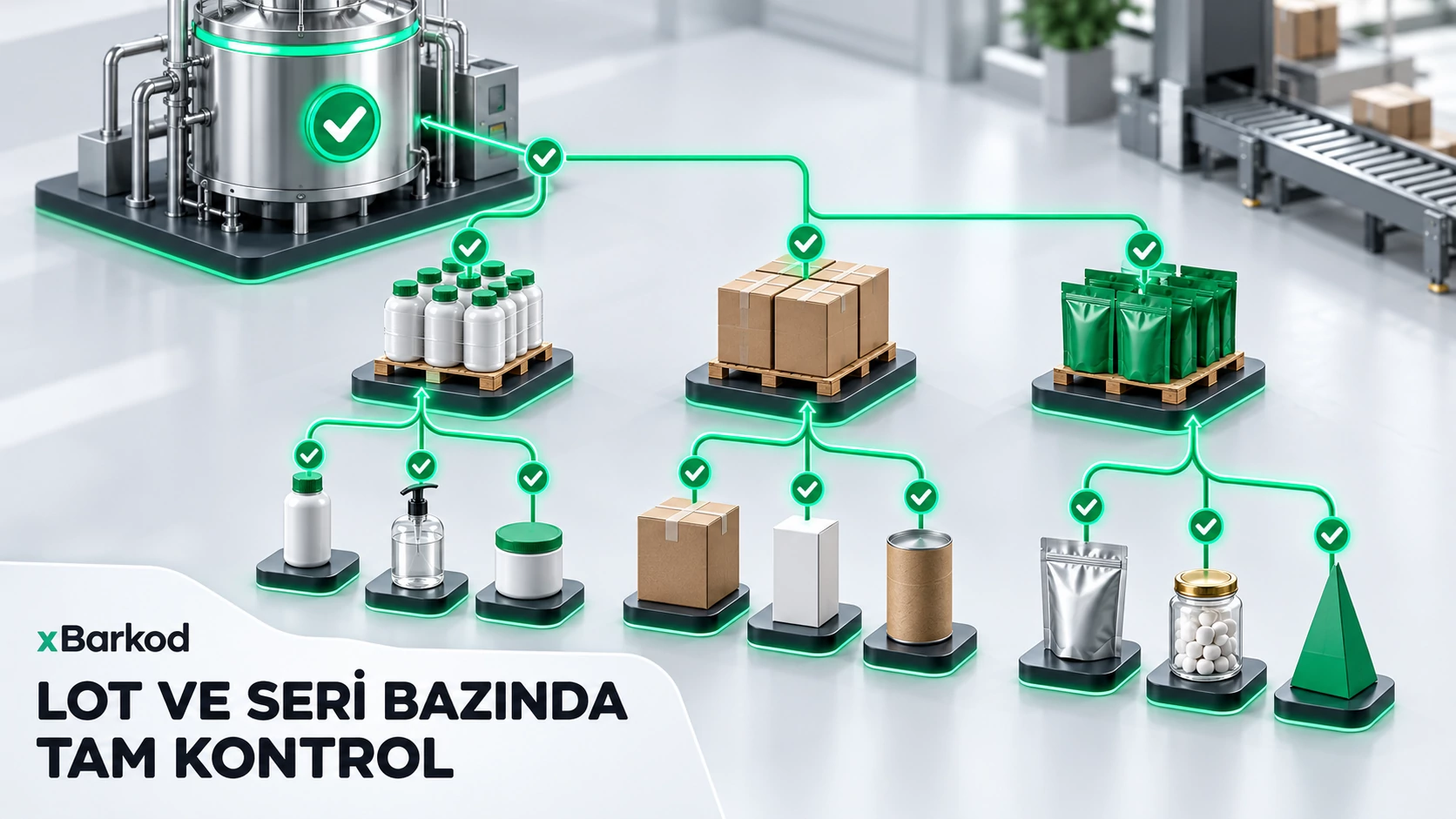
Food Lot Tracking: A Practical Guide from Records to Recall Readiness
Build food lot tracking with current batch rules, linked ingredient-production-dispatch records, recall drills, and item-level authentication controls.
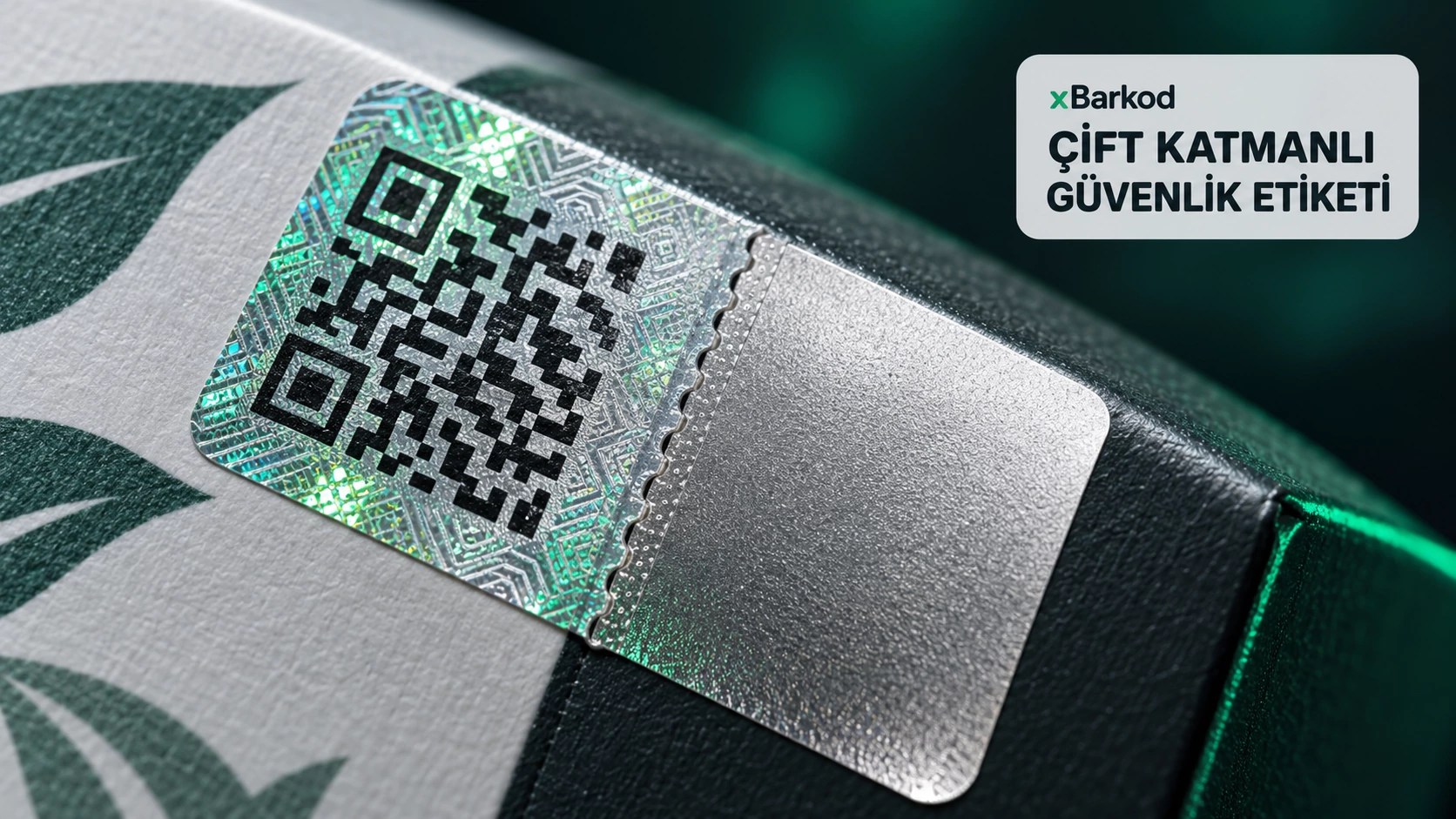
QR Code Authentication for Textile Products: An E-Commerce Brand's Daily Workflow
Learn how an e-commerce textile brand manages QR authentication through product coding, label application, dashboard review, and suspicious-use checks.