Electronics Authenticity Checks: A Guide for Brands and Importers

Checking the authenticity of an electronics product requires more than inspecting its appearance or looking up a single serial number. For a brand, importer, or distributor, a credible review asks whether the model, device identity, package, sales channel, and authentication history all point to the same physical item.
A customer often wants one answer to a simple question: ‘Is this product genuine?’ A company can answer responsibly only after separating the data that identifies a product type from the data that distinguishes a device or records a sale. Otherwise, a plausible barcode or valid-looking serial number may be treated as stronger evidence than it really is.
This guide helps electronics businesses design a reviewable authenticity workflow without promising certainty. The goal is to connect item identity to the intended package and channel, make suspicious use visible, and give customer support an evidence-based route for decisions.
What does an electronics authenticity check need to accomplish?
Current Turkish-language searches ask where to check a serial number, why the number on a box should match the device, and how to judge the seller. This intent goes beyond reading one printed mark. People look for a combination of identity, purchase evidence, and an official support channel.
The brand’s requirement is wider than providing a customer-facing lookup screen. The business must know which device entered which package, where the item was dispatched, whether its authentication code has prior use, and which team reviews a warning.
- Customer need: Use the correct channel and understand the result.
- Operations need: Match the device, box, label, and dispatch record.
- Brand-protection need: Investigate reuse or product mismatches with supporting evidence.
Are a barcode, serial number, and authentication code the same?
No. A product barcode commonly identifies a model or trade-item class and may be shared by many physical units. A serial number can distinguish one device. An authentication code, depending on the brand’s system, can connect an individual pack or saleable unit to a digital verification record.
The GS1 Global Traceability Standard separates class-level, batch-level, and instance-level identification. It explains that a product identifier combined with a serial number can uniquely distinguish an individual instance. That distinction helps explain why a shared barcode does not establish the authenticity of one device.
A correctly formatted serial number is not sufficient by itself. It may have been copied from another device, printed on the wrong box, or connected to a different product in company records. A useful check therefore examines the source, matching record, and use history of the identity.
What does each control tell you?
Each record answers a different question. Appearance and accessories offer physical clues; a model barcode describes the product type; a serial number distinguishes a device; invoice and seller data describe the commercial channel; and an item-level authentication event describes the status of a code.
No single component tells the whole story. A stronger method asks whether records created at different points form a consistent chain for the same item. A mismatch is a reason to gather more evidence, not an automatic counterfeit verdict.
| Control | Question answered | Limit when used alone |
|---|---|---|
| Model barcode | Which product type is this? | It may not distinguish one device. |
| Serial number | Which physical device is this? | It may be copied or misassigned. |
| Package match | Do box and device carry the same record? | It does not validate the source of the record. |
| Invoice and seller | Which commercial channel supplied it? | It does not validate physical identity alone. |
| Item authentication | Is the code valid and previously used? | It needs company context. |
How should a brand build the review workflow?
If the workflow is invented after a customer reports a problem, different teams may assign different meanings to the same signal. Before market release, document the identity level, data owner, packaging control, dispatch link, customer message, and accountable reviewer.
- Define the product master: Select the authoritative source for model, variant, and package data.
- Select item identity: Describe how the device serial and customer authentication code relate.
- Bind device and box: Confirm that the intended device enters the intended package.
- Manage label states: Separate unused, damaged, voided, and reprinted labels.
- Add dispatch context: Record the distributor, dealer, market, or order assigned to the item.
- Write customer messages: Explain first use, repeat use, and mismatch outcomes.
- Assign the reviewer: Define decision boundaries for support, quality, and brand protection.
- Run a pilot: Test every relationship with real devices, boxes, and sales scenarios.
This sequence prevents code generation from being mistaken for the whole project. The guide to creating unique product codes explains how item identity can be managed with product and market records.
How do you keep device and package identities connected?
An electronics serial number and a package authentication label may be created at different process points. The packing station should therefore verify the relationship, not merely the presence of a label. Repacking, customer returns, and service replacements also need defined rules.
If a device moves to another box without preserving the old and new relationship, the customer result may appear misleading. When a damaged label is reprinted, the previous code should be closed and the replacement connected to the same product under control. This reduces the risk of two apparently active identities circulating for one item.
Why do channel and return records matter?
A correctly identified item appearing in an unexpected channel can have explanations other than counterfeiting, including parallel trade, a dispatch mistake, a return, or delayed records. Review the authentication event alongside distributor dispatch, dealer receipt, e-commerce order, and support evidence.
Returned electronics need particular care. The box, device, accessories, and authentication label may no longer belong together. Before approving resale, compare the serial number, packaging code, prior authentication, service activity, and reason for return.
- Does the sale or dispatch match the expected market and channel?
- Do the package description and variant match the authentication screen?
- Has the serial appeared in another box, return, or service record?
- Did authentication occur before the recorded dispatch or sale?
- Do customer photos and proof of purchase support the same item?
How should a suspicious authentication signal be investigated?
A reused code, unexpected location, or product mismatch starts an investigation; it does not automatically prove a counterfeit. The customer may have checked the item again, a service employee may have scanned it, or location data may be limited. First confirm the signal against the product record and earlier events.
Next, gather physical and commercial evidence. Review the device and box serials, label condition, authentication screen, seller, invoice, dispatch, and support records together. Escalate unexplained conflicts to the accountable quality or brand-protection team.
The risk of copying a visible QR symbol must also be addressed in the design. The guide to copied QR codes explains why a concealed check and prior-use history perform separate jobs.
Does an official product-safety notice replace authenticity checking?
No. Türkiye’s Unsafe Product Portal, GÜBİS, publishes products that competent market-surveillance authorities have identified as unsafe. It is not a serial-number service that confirms whether a particular electronics device belongs to a brand.
Safety notices and authenticity checks answer different questions. The absence of an unsafe-product notice does not automatically make an item genuine. A notice should not be generalised to every product made by the same company. A company workflow should explain these boundaries clearly to customers.
Where does xBarkod fit into electronics verification?
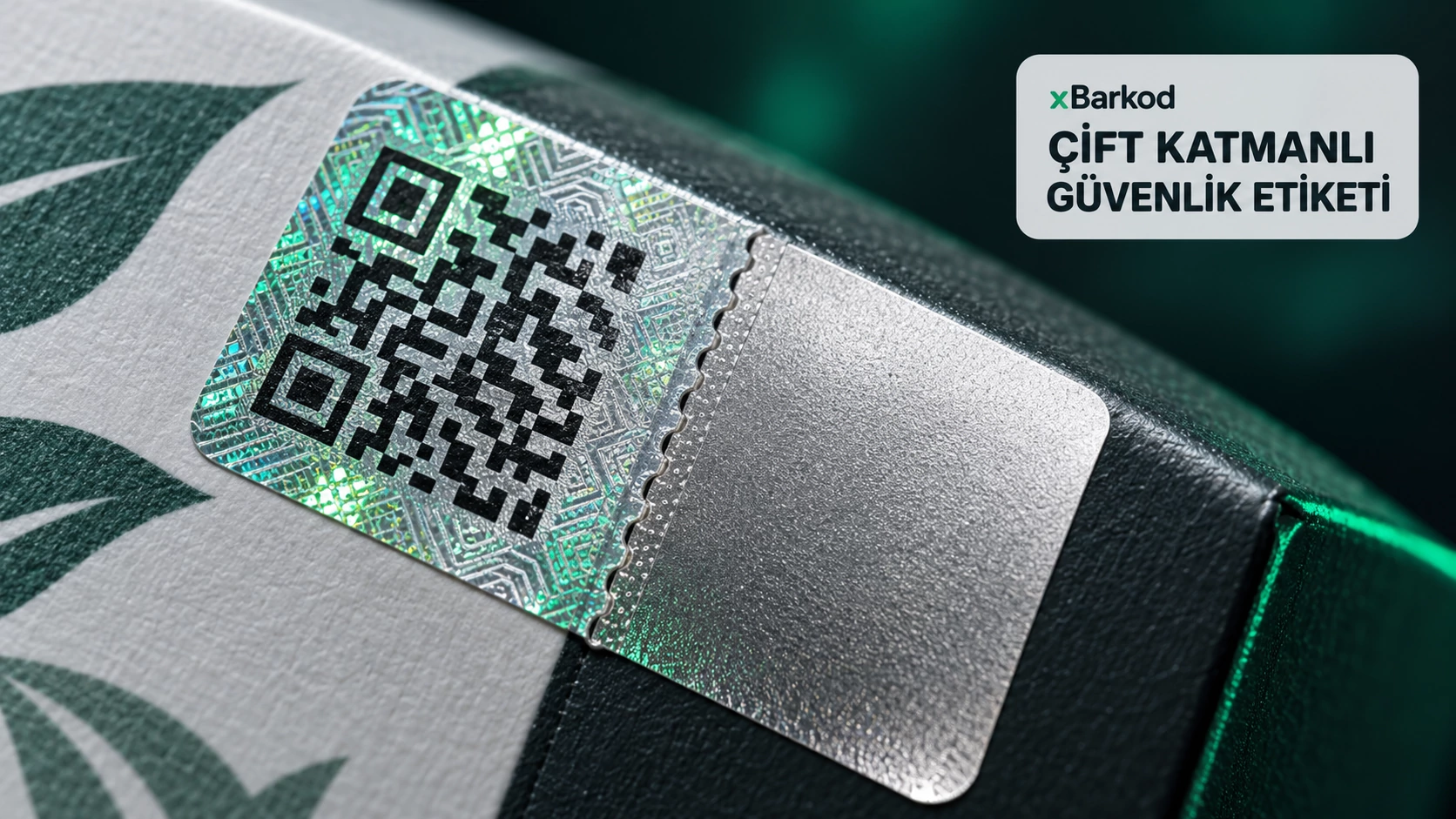
The xBarkod product authentication system supports a unique QR code and concealed scratch-off PIN for each product. A customer scans the QR code with the xBarkod App and enters the PIN, allowing the system to check code validity and prior use while recording the event in the company dashboard.
Product, time, location, and use-history information becomes visible to the company for review. When these records are interpreted with device serial, package match, dispatch, sale, and support evidence, teams can prioritise electronics incidents more consistently.
The system does not inspect internal components like a laboratory and cannot establish authenticity in isolation. Its value depends on the brand maintaining the correct product-to-code relationship and connecting signals to an operating review. The QR product authentication guide expands on this customer and company flow.
Which acceptance criteria should a pilot include?
A pilot should do more than show that a phone can read the QR code. Use real devices, boxes, labels, packing points, and support scenarios to test whether item identity remains connected end to end. Write the criteria before testing begins.
- Does every test device open the intended model, serial, and package record?
- Do first use and legitimate repeat use show the intended messages?
- Do copied, voided, or deliberately mismatched test codes enter the correct workflow?
- Is the old-to-new identity relationship preserved after a return or service replacement?
- Can the assigned team interpret the dashboard event with company records?
- Does a customer warning point clearly to an official support route?
Do not convert the result into a universal success rate. Evaluate matching errors, unreadable labels, explained repeats, and unresolved cases in your own process. A wider rollout should depend on the company’s real workflow and its stated acceptance threshold.
Frequently Asked Questions about electronics authenticity checks
Does a barcode lookup prove that an electronics product is genuine?
No. A shared product barcode normally describes a model or product type. The serial number, package, sales channel, and the brand’s item-level authentication record should also be reviewed for a specific device.
Is a product definitely genuine if its serial number is valid?
No. A valid number may have been copied onto another item or matched to the wrong package. Consistency between the brand’s official record, device, box, and purchase evidence matters.
Why compare the serial number on the box and device?
The comparison is a basic check that the intended device and package remain together. A mismatch may result from repacking, a return, service activity, a record error, or a more serious risk, so it needs an explanation.
What does a previously used authentication code mean?
It means the code was checked before; it does not prove counterfeiting by itself. Time, location, customer rechecks, service activity, and return records help separate legitimate use from an unexplained repeat.
Can GÜBİS confirm the authenticity of an electronics product?
GÜBİS publishes notices about products identified as unsafe by competent authorities. It does not compare a specific device serial with a brand’s records to confirm authenticity.
What does a scratch-off PIN add to electronics authentication?
It adds information concealed until the first authentication beside the visible QR code. This creates another check against simple image copying, while controlled printing, package matching, and incident review remain necessary.
Can an electronics authentication system eliminate counterfeiting?
No single tool guarantees that outcome. Item identity, concealed control, packaging discipline, channel records, customer messaging, and incident management work together to make risks more visible and reviewable.
Conclusion: Look for a consistent record chain, not one mark
A credible electronics authenticity check does not depend on seeing one barcode or serial number. It comes from the device, box, channel, and authentication records describing the same item consistently. Teams should understand the limit of every control and investigate conflicts before reaching a conclusion.
Begin with one product family and one risk question. Test xBarkod’s unique QR code, scratch-off PIN, xBarkod App, and company dashboard with your real device, packaging, and support workflow, then use a measurable pilot to assess product-to-code matching and exception handling.
More Articles
Food Lot Tracking: A Practical Guide from Records to Recall Readiness
Build food lot tracking with current batch rules, linked ingredient-production-dispatch records, recall drills, and item-level authentication controls.
QR Code Authentication for Textile Products: An E-Commerce Brand's Daily Workflow
Learn how an e-commerce textile brand manages QR authentication through product coding, label application, dashboard review, and suspicious-use checks.

Counterfeit Product Detection Systems: From Signal to Decision
Learn how to build a counterfeit product detection system using item identity, authentication signals, channel records, case review, and a controlled pilot.