Scratch-Off Code Product Authentication: How the Hidden PIN Flow Works
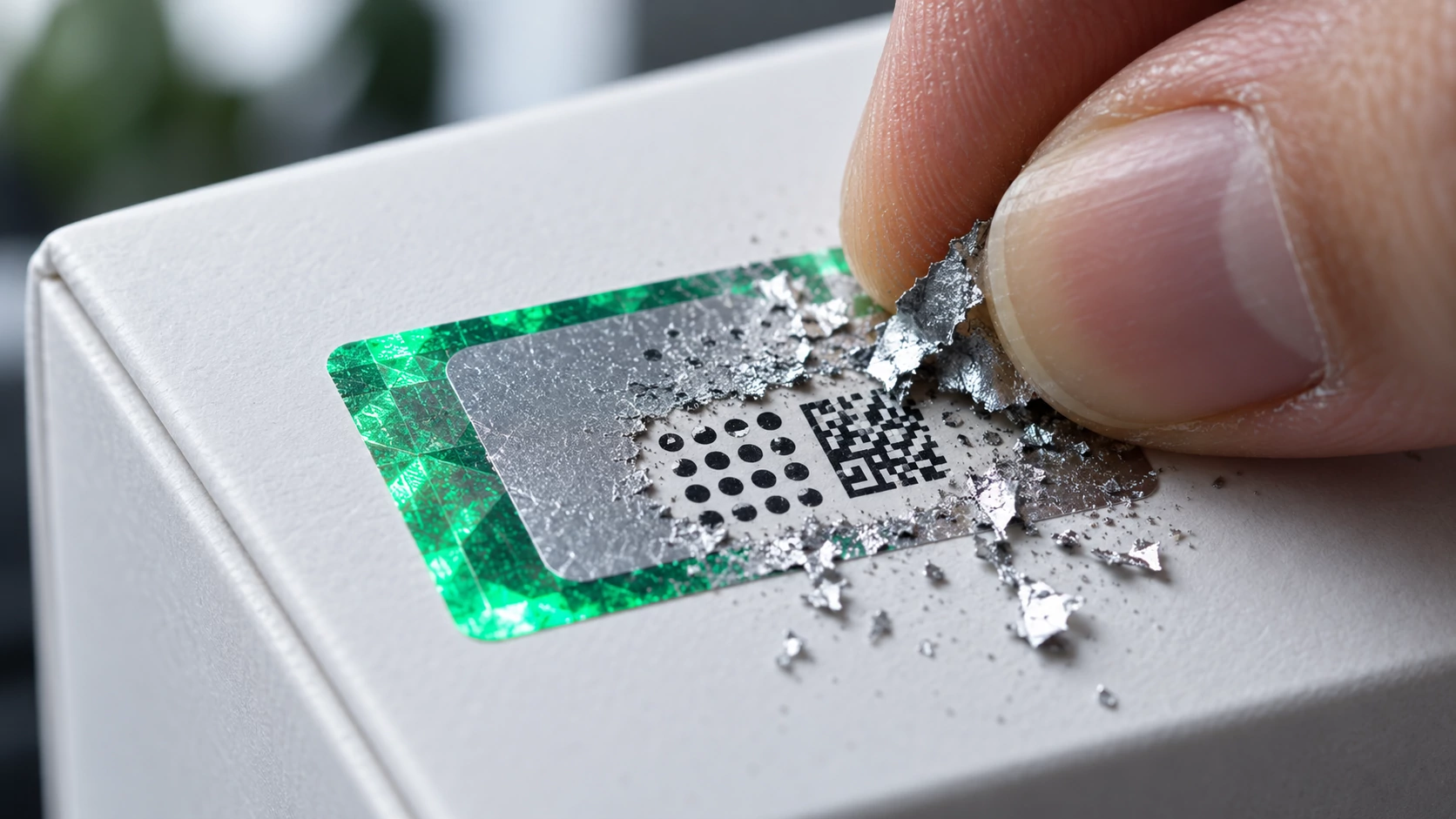
Scratch-off code product authentication uses a concealed PIN that is revealed only when a customer is ready to verify a specific product. A dependable flow does more than place a QR image on packaging: it connects an item-level identity, an intact PIN cover, a clear customer result, and an event the brand can review.
The method creates a controlled link between the package in the customer's hand and a record created by the brand. A valid code is useful evidence about that record and its usage history, but it should not be described as a laboratory test of the contents or an unconditional guarantee about the entire supply chain.
For the brand, the central decision is not simply which label to buy. Teams must define which product receives each code, when the concealed field may be opened, what the customer sees after a check, and who investigates an unusual result. Those choices belong in the operating design before labels reach production.
What problem does a scratch-off code address?
A visible QR code can open a manual, campaign, or shared product page. Because the image is exposed, it can also be copied. A scratch-off layer introduces information that is meant to remain hidden until the product reaches the verification moment, adding a separate checkpoint to the customer journey.
Concealment alone is not enough. The PIN needs to be linked to the intended product record, the query must reach an official brand-controlled flow, and the system should explain validity and prior use. Without those connections, the silver layer is a packaging feature rather than a functioning authentication process.
GS1's explanation of serialisation and unique identification distinguishes a base product identity from information that identifies an individual instance. The same discipline helps brands avoid treating a repeated product barcode as an item-level security identity.
Why separate the visible QR code from the concealed PIN?
The QR code can take the customer into the correct flow and call up a product record quickly. The concealed PIN is a second piece of information entered after the protective field has been opened. Although both elements belong to one workflow, their exposure and control purposes differ.
A brand should document the model in plain terms:
- A general barcode may repeat across every package of the same product variant.
- A unique QR identity is linked to a specific saleable unit or package.
- The scratch-off PIN is intended to stay concealed before authentication.
- The result explains the code record and relevant usage history.
- The dashboard event gives the brand a signal for later review.
This separation also improves packaging instructions. Customers should know that they scan first, reveal and enter the PIN second, and then read both the result and any next step. The wording on the label must agree with the screens in the app or web flow.
How should a brand prepare the authentication flow?
Start by selecting the product family and packaging level that will be authenticated. A shipping case, inner box, and individual sale unit are not interchangeable. If the customer receives the individual package, the digital identity must be connected to that unit rather than only to an outer logistics label.
Next, control code allocation against the product master record. Product name, variant, packaging revision, and any relevant batch or serial reference should be unambiguous. A perfectly functioning code placed on the wrong variant can still return misleading information, so application controls matter as much as the lookup service.
Finally, define label states. Received, applied, damaged, unused, cancelled, and destroyed labels should not collapse into a single inventory count. The existing security-label application guide covers placement and pre-production checks that support this stage.
What steps should the customer follow?
The customer journey should be short, visible, and easy to stop if something looks wrong. Ask the user to reach the official authentication surface before revealing the PIN. This gives the customer a chance to inspect the packaging instruction and confirm that the destination belongs to the expected brand flow.
- Inspect the security label and package for visible damage.
- Scan the QR code with the app or verification surface named by the brand.
- Reveal the scratch-off field; do not guess repeatedly if the PIN is unreadable.
- Enter the PIN only in the official authentication screen.
- Read the result, prior-use information, and recommended next step together.
In the xBarkod product authentication flow, the customer scans the QR code with xBarkod App, enters the concealed PIN, and receives a result. The system can check whether the code was used before, while the company can review authentication activity through its dashboard.
What should an authentication result communicate?
A result screen should not rely on a green or red icon without context. It should state whether the code matches a record, whether prior use is relevant, and what the customer should do next. An uncertain result needs a safe route to support or additional review rather than a dramatic but unexplained verdict.
A valid first-use result means that the queried label identity matches the system record and has no earlier recorded use in that flow. It does not test the product's chemical contents, prove the seller's authorisation, or confirm every movement in the supply chain. Packaging and purchase context may still need review.
For an invalid or unknown code, support may ask the customer to retain the package, label, and proof of purchase. The brand should distinguish typing errors, poor print quality, missing activation, incorrect product assignment, and possible unauthorised copying with evidence instead of treating every failed query as the same incident.
How should a prior-use warning be interpreted?
Prior use is an important risk signal, not automatic proof of a counterfeit. A customer may check the same product twice, a support agent may perform a test, or a return process may trigger another scan. Product, time, and the operating context are needed before the event can be classified.
Repeated queries from distant places over a short interval may deserve closer review. Even then, location does not independently identify a seller, user, or channel breach. The brand should compare the signal with dispatch, order, dealer, return, and support records before making an allegation or customer-facing claim.
The related guide on copied QR code risk explains why a visible code needs more than a destination page. A concealed PIN changes the evidence available to the brand, but it does not replace physical inspection or incident management.
How do production and support teams share the workflow?
Production is responsible for applying the intended label to the intended product and keeping the concealed field intact. Warehouse operations preserve the item-to-code relationship through dispatch. Customer support explains results without exposing PINs through unnecessary screenshots, messages, or shared documents.
Define the minimum incident record in advance: product, code reference, authentication time, displayed result, package condition, sales channel, and proof of purchase when available. If personal or location data is processed, retain only what the business purpose requires and follow the company's applicable privacy process.
Without named ownership, a useful warning can remain unattended. The procedure should identify the first reviewer, escalation conditions for quality or brand-protection teams, and the customer response path. This operating layer turns authentication technology into a repeatable daily control.
Where does xBarkod fit?
xBarkod combines a unique QR code and a concealed scratch-off PIN in one authentication flow for each product. The customer scans and enters the PIN through xBarkod App. The company dashboard makes product, time, and location information visible and supports review of suspicious authentication activity.
The platform does not replace the brand's product master data, label-application controls, dispatch records, or support decisions. Those records remain under the company's ownership. The authentication event becomes more useful when it is reviewed beside those operational sources rather than in isolation.
When assessing the solution, test item-to-code assignment, PIN concealment, first-use and repeat-use messages, and the dashboard record on your actual packaging. Brands can use that pilot to decide whether the xBarkod flow fits their product, channel, and support responsibilities.
Which scenarios belong in a pilot acceptance test?
A pilot should cover more than a successful first authentication. Include a wrong PIN, prior use, a label assigned to the wrong item, unreadable print, an inactive record, and escalation to customer support. For every scenario, compare the customer-facing message with the dashboard event.
- Is the label linked to the correct product and packaging revision?
- Does the PIN remain concealed and readable until the customer step?
- Does the QR code reach only the expected official verification surface?
- Are first use and repeated use explained differently?
- Do invalid entries produce a clear and safe next step?
- Can the dashboard event be reconciled with dispatch and support records?
- Are cancelled and unused codes prevented from authenticating?
Written acceptance criteria keep the decision focused on the whole workflow rather than label appearance. Record each unresolved issue, its owner, and the corrective action. The brand should approve launch only after critical scenarios behave consistently across the package, customer screen, and company review process.
Frequently asked questions about scratch-off code authentication
What is scratch-off code product authentication?
It is a process in which a concealed PIN linked to a specific product record is revealed by the customer and checked through an official brand system. The workflow commonly combines a visible QR code, the hidden PIN, a customer result, and a company-side event record.
Is a scratch-off PIN the same as a general product barcode?
No. A general barcode usually identifies a product class and repeats across units of the same variant. A scratch-off PIN is concealed authentication information tied to a particular label or saleable unit. The brand should manage those identifiers as separate records with different purposes.
Does first use prove that a product is unquestionably genuine?
First use is strong evidence that the code matches the brand record and has no earlier recorded use in that flow. It is not an unconditional conclusion about contents, packaging integrity, seller status, or purchase context, all of which may require separate checks.
What should a customer do if the scratch-off field is already open?
The customer should pause before using the product and contact the seller or official brand support. Keep the package, label, and proof of purchase, and do not publish the PIN. The brand can then review where the damage may have occurred using available records.
Is a prior-use warning proof of a counterfeit?
Not by itself. A repeated customer check, support action, or return may provide an ordinary explanation. The brand should compare product, time, location, order, and support records before deciding whether the event can be explained or needs escalation.
Does xBarkod replace production or inventory software?
No. xBarkod provides unique QR codes, concealed PINs, customer authentication, and dashboard visibility. Production orders, inventory, dispatch, dealers, returns, and customer-support records continue to be managed in the brand's own operating systems.
Conclusion: Connect the hidden code to an explainable process
The value of scratch-off authentication comes from the relationship among an item-level identity, a protected PIN, a clear result, and evidence-based brand review—not from the silver coating alone. It becomes sustainable when production, dispatch, and support responsibilities are designed around the same code lifecycle.
Choose one product family for the next step and test first use, repeated use, and failure scenarios on real packaging. The xBarkod workflow can then be evaluated against your acceptance criteria for item assignment, concealed PIN handling, customer messages, and dashboard records.
More Articles

Product Authentication Code Mapping: A Daily Workflow for Private Label Brands
Learn how private label brands map authentication codes to products, manage QR and hidden PIN checks, review dashboard activity, and investigate suspicious use.

Product Authentication System Setup: A Daily Workflow for E-Commerce Brands
Set up product authentication with clear records, unique codes, QR and hidden PIN checks, dashboard review, and suspicious-use handling for e-commerce brands.

Product Authentication Location Tracking: From Setup to Daily Review
Build product authentication location tracking with clear permissions, data quality, daily review, privacy controls, and practical pilot criteria.